


Key Sector for Argentinians, Agribusiness Calls for More Predictable Rules
Jul, 15, 2025 Posted by Denise VileraWeek 202530
Brazil and Argentina are among the world’s largest agricultural producers and exporters. Despite their geographical proximity and climatic similarities in some regions, the two countries follow distinct paths in the development of agribusiness, both structurally and macroeconomically.
In Brazil, agribusiness accounted for approximately 23% of the country’s GDP in 2024, according to the Brazilian Confederation of Agriculture and Livestock (CNA), totaling R$ 2.72 trillion. This strength is supported by production scale, climatic diversity, technological innovation, and relatively broad access to rural credit. Agriculture has adopted practices such as no-till farming, biotechnology, and digital solutions, establishing itself as a global benchmark in tropical production efficiency.
But challenges remain. Logistics infrastructure is a bottleneck, especially in areas like Matopiba, and storage capacity—between 190 and 200 million tons—does not cover the entire grain harvest. Tax complexity and pressure for sustainability, both domestic and international, also require constant adaptation from the sector.
“Retenciones”
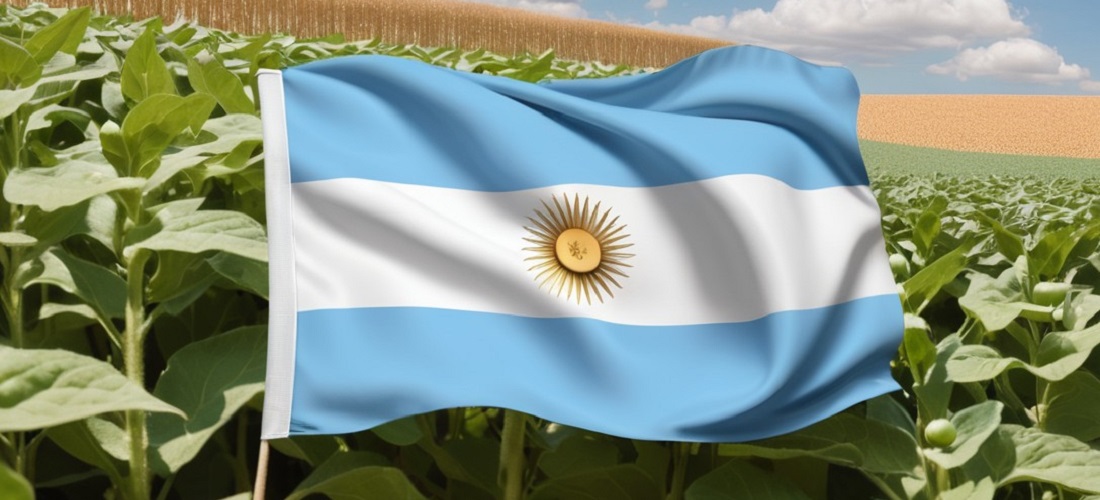
In Argentina, agribusiness is also a cornerstone of the economy. According to the Fundación Agropecuaria para el Desarrollo de Argentina (FADA), agriculture accounted for 23.1% of GDP in 2023, or US$124.3 billion. With naturally fertile soils in the Pampas region, the country is a key exporter of soy (the leading exporter of soy meal), corn, wheat, and beef.
However, this performance is hampered by macroeconomic instability. Agricultural exports are burdened by “retenciones”—export taxes that reach 33% on soy and 12% on corn—and by limited access to credit, which undermines investment and competitiveness.
In recent years, multiple parallel exchange rates have emerged (blue, MEP, CCL, and “soy dollar,” among others), with gaps of up to 100% between them, making it difficult to repatriate funds. “We struggled to get authorization to buy dollars, faced delays with international suppliers, and had to resort to parallel rates,” an entrepreneur told Valor.
“It will take time for businesspeople and individuals to stop keeping their money outside Argentina and start investing here,” said Antonio Ceolin, CEO of Ceagro in Brazil and the Ceolin Group in Argentina.
Storage structure is another stark contrast: with a capacity of 70 to 80 million tons for a crop that exceeds 130 million, the country relies heavily on silo bags—a cheaper and widely used solution on farms.
In 2025, President Javier Milei’s government announced temporary reductions in export taxes and eliminated levies on products from regional economies. While these measures addressed some of the sector’s demands, they were seen as palliative. The industry continues to call for predictability, clear rules, and policies to promote storage and exports.
The journalist traveled at the invitation of Kepler Weber
Source: Globo Rural
-
Sugar and Ethanol
Jun, 26, 2019
0
São Martinho plans to process 8% more sugarcane in the 2019/20 harvest
-
Fish
Sep, 12, 2024
0
Tilapia: Exports Decline in August
-
Meat
Apr, 20, 2020
0
Chinese pork imports expected to grow 33% this year to meet domestic demand
-
Ports and Terminals
Jul, 07, 2025
0
Santos-Guarujá Tunnel: Port Authority wants ownership of the project and will make demands to the São Paulo State Government