

Mercosur-EU deal may reshape Argentina’s auto industry, but impact will be gradual
May, 07, 2026 Posted by Gabriel MalheirosWeek 202619
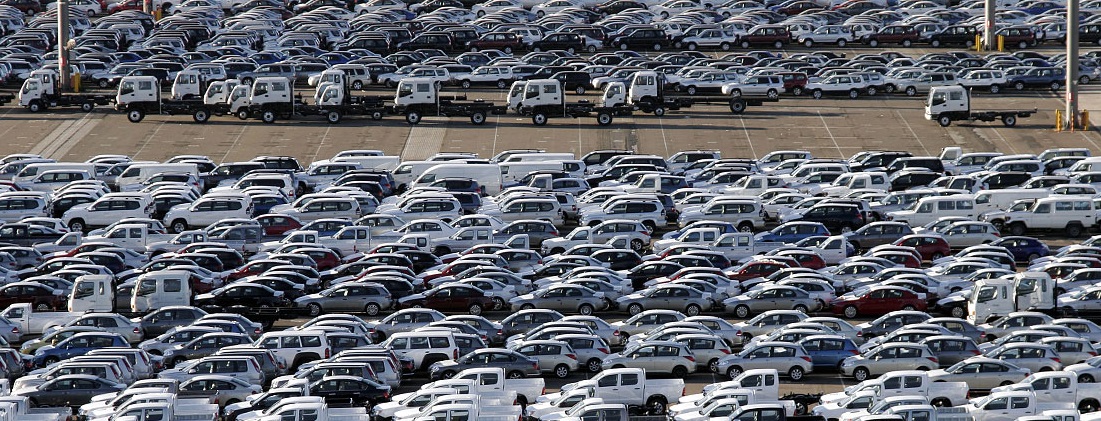
The entry into force of the Mercosur-European Union trade agreement creates a new framework for Argentina’s automotive industry, although its effects are unlikely to be immediate or uniform. According to the agreement’s tariff-reduction schedule, the sector was treated as one of the most sensitive areas in the negotiations, leaving vehicles under extended protection while opening space for a faster liberalization of some auto parts and industrial inputs.
Passenger cars, light commercial vehicles, pickups and several commercial vehicle categories will continue to face high levels of tariff protection for years. By contrast, auto parts, selected industrial inputs and some technology-related components appear among the segments with the potential for earlier market opening.
At the center of the agreement is a tariff phaseout system that classifies products according to the number of years required to eliminate import duties. Categories such as “0,” “4,” “7,” “8,” “10” and “15” define different liberalization timelines. For the automotive sector, however, one of the most important provisions is category “15V,” created specifically for vehicles considered sensitive by Mercosur.
That category covers a large share of the regional market, including passenger cars with different engine sizes, light utility vehicles, pickups and some light tractors. For these products, the base tariff — 35% in Argentina and Brazil — will remain unchanged for the first six years. Only from year seven onward will the tariff begin to fall gradually, reaching zero in year 15. In practice, this means European finished vehicles will not enter Mercosur under an immediate full opening.
For Argentina and Brazil, that structure preserves protection for finished vehicles through much of the next decade, in line with the bloc’s longstanding strategy of shielding segments where local production remains significant.
The agreement does include an important exception within the same category. For vehicles classified under “15V,” an annual quota of 50,000 units will benefit from a 50% reduction in the base tariff from the start of the agreement through the end of year eight. That quota is distributed among Mercosur countries, with 32,000 units allocated to Brazil, 15,500 to Argentina, 1,750 to Uruguay and 750 to Paraguay.
The mechanism does not eliminate tariffs, but it does improve import conditions relative to the current framework. Its commercial effect, however, is likely to be constrained by the size of the quota and by automakers’ decisions on which models to prioritize. In practical terms, the most visible short-term effect could be limited to certain European vehicles entering under quota, rather than a broad-based decline in prices across the market.
For automakers with operations in Argentina, the main relevance of the agreement may lie less in short-term sales and more in its potential use as a strategic argument in discussions with global headquarters. The Argentine Association of Automobile Manufacturers, ADEFA, said in a statement that the agreement could serve as a bridge between local subsidiaries and global decision-making centers.
From an industrial standpoint, the expectation is that a shared trade framework with the European Union could improve the position of local subsidiaries when competing internally for future investment projects. That would not guarantee new production plans, but it could improve predictability in a sector where investment cycles are long and allocation decisions are made globally.
Electrified vehicles, meanwhile, face a slower tariff path than might be expected. Hybrid and electric vehicles will keep a 25% tariff for the first five years, after which duties will be reduced in stages until reaching zero only in year 18. For hydrogen-powered vehicles, the timetable is even longer: the base tariff remains in place through year six, followed by a partial reduction, with full elimination only in year 25.
In heavy commercial vehicles, buses, trucks, chassis and road tractors, the framework is more restrictive still. Several tariff lines fall into category “E,” meaning they are excluded from tariff preferences and will continue under the current regime.
For pickups and light utility vehicles, the picture is more mixed. Some products fall under long tariff-reduction schedules, while others are included in the “15V” category. In theory, that creates a future opportunity for Argentina, whose industry has become increasingly specialized in pickups and commercial vehicles, with operations including Toyota in Zárate, Ford and Volkswagen in Pacheco, and Stellantis and Renault in Córdoba.
Any attempt to expand exports to Europe, however, would depend on much more than tariffs. Argentine-made pickups would still need to comply with rules of origin, technical and environmental regulations, safety requirements, homologation standards and, above all, each automaker’s global production strategy. Carmakers already have manufacturing platforms assigned to other regions, and in many cases maintain industrial arrangements with plants designed to supply specific markets. The agreement may improve the framework, but it does not by itself guarantee new export destinations.
Where the effects could emerge sooner is in auto parts. Unlike finished vehicles, many components are subject to shorter tariff-reduction schedules. These include industrial inputs, electrical parts, batteries, tires, body parts, safety systems, transmission components and other key elements used in vehicle manufacturing.
The agreement comes at a time when Argentina’s automotive sector is no longer broadly diversified across all vehicle segments, but instead increasingly concentrated in mid-size pickups and commercial vehicles. That specialization suggests the treaty should be viewed not simply as a trade-opening measure, but as part of a broader industrial strategy involving decisions on what to produce, for which markets, with what level of local content and under what competitive conditions.
In that sense, the potential impact on Argentina can be divided into two phases. In the short term, the most visible changes are likely to come through the reduced-tariff vehicle quota and through some adjustments in auto parts and industrial inputs. Over the longer term, the more meaningful question will be whether Argentina can use the agreement to attract new investment, strengthen its export profile and secure a stronger position within global value chains.
Source: La Nación
-
Meat
Oct, 11, 2022
0
Pork: Brazil earns 35.4% of Oct 2021 revenue in 5 working days
-
Coffee
Oct, 10, 2024
0
Brazil exports record 4,5 million bags of coffee in September
-
Fruits
Mar, 28, 2025
0
Foreign Fruit and Vegetable Imports at CEASA/MS Surge by 105%, Driven by Apples and Logistics
-
Ports and Terminals
Nov, 22, 2023
0
Port of Porto Alegre suspends activities due to Lake Guaíba flood