


Multicargo Terminal Expansion Boosts Operations at Port of Açu
Dec, 11, 2025 Posted by Lucas LorimerWeek 202550
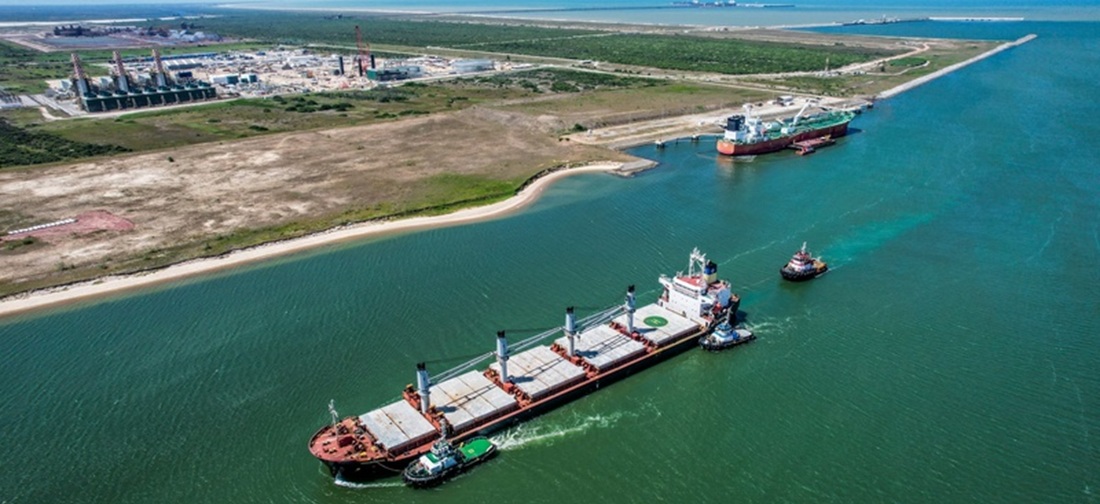
Expansion works on the Port of Açu quay and the implementation of a second berth for the Multicargo Terminal (T-Mult) continue to advance. Investment has already surpassed R$140 million and is expected to reach up to R$300 million over three years, as part of a project that includes the construction of storage yards, warehouses, stockpiling infrastructure, and new equipment.
In 2025, the terminal’s operational quay area increased from 340 meters to 500 meters, with a draft of 13.1 meters and space to operate two Panamax-type vessels simultaneously, each with a capacity to transport up to 75,000 tonnes.
The increased capacity has a significant impact on Brazil’s productive sector, explains João Braz, Director of Logistics and Terminals at the Port of Açu. “The quay expansion raises T-Mult’s operational capacity for coke and coal operations and also creates room for more agribusiness-related cargoes, including grains and fertilizers,” he said.
The executive notes that it will also be possible to attract demand for exporting critical minerals essential for the energy transition, such as lithium concentrate and copper used in electric-vehicle battery manufacturing.
“The expansion will allow us to increase our product portfolio, handle large-scale volumes, and develop new projects, such as the grain terminal and a blending unit planned for the coming years,” Braz added.
Modern infrastructure
Actions like these make it clear how strategic the Port of Açu is for companies seeking logistical efficiency, innovation, and sustainability — with its 11 private terminals, 30 companies operating there, and connections linking Brazil’s main urban centers to global value chains.
With the expansion, the Multicargo Terminal’s handling capacity is expected to reach 2.7 million tonnes per year initially. Considering the increased storage area, the Port of Açu projects doubling that volume in the coming years, reaching 5 million tonnes by 2028.
According to Vinicius Patel, Director of Port Administration and Services at the Port of Açu, the project combines innovation, sustainability, and efficiency. “Açu is the largest private deepwater port and industrial complex in Latin America. Its modern infrastructure allows faster, safer operations, reducing logistical costs and berthing time.”
Efficient land connections and proximity to industrial hubs and oil and gas production areas, such as the Campos and Santos Basins, provide synergies with various production chains. “The Port of Açu was designed as an integrated industrial ecosystem that hosts companies from complementary sectors, enabling technological partnerships and shared infrastructure. The complex brings together operations in energy, mining, oil, and gas, as well as development projects focused on the energy transition,” Patel said.
“We have the third-largest iron ore terminal in Brazil, we are responsible for around one-third of Brazil’s oil exports, we built the largest thermoelectric park in Latin America, and host the largest offshore support base in the world,” he added.
Integrated offering
Strategically located in São João da Barra, in the northern region of Rio de Janeiro State, the Port of Açu offers clients a full-service ecosystem combining maritime infrastructure, environmental licensing, customized solutions, and emergency response. All operations follow high standards of competitiveness, safety, and sustainability, reinforced by certifications such as ISO 9001, 14001, and 45001.
The Operations and Emergency Response Center (Core) provides certified structure and is a national reference in safety and risk management, while companies operating at the port also benefit from the VTS (Vessel Traffic Service) Center — the first maritime traffic management system authorized by the Brazilian Navy.
Custom solutions for clients in logistics, foreign trade, mining, agribusiness, oil & gas, and energy include berthing, anchorage, waste management, environmental consulting, dredging, technical inspections, temporary storage, and a unified emergency-response center. This breadth differentiates Açu as a port ready for any demand, reducing the time and cost of logistical operations.
Energy transition
Açu’s business model has attracted projects for green hydrogen and ammonia plants, offshore wind support factories, biogas, fertilizers, and steelmaking, always aligned with promoting low-carbon industrialization. Its international partnership with the Port of Antwerp-Bruges provides global know-how for these initiatives. Açu and the Belgian port signed a letter of intent to develop a “green maritime corridor” between the two locations, with infrastructure for alternative-fuel bunkering, and to project entry into operation by 2030.
The Port of Açu aims to become a decarbonization ecosystem for global companies. The complex is betting on green hydrogen as a fundamental input for industrial use in Brazil, enabling the production of green ammonia, green methanol, hydrotreated vegetable oil (HVO), fertilizers, and hot-briquetted iron (HBI), used in blast furnaces at steel plants.
In addition, the port has LNG available and is developing a project to connect to the national gas network, using this transition fuel as a reliable energy source for industrialization.
The Port of Açu completed 11 years of operation in October and has since attracted more than R$60 billion in foreign investment, handled nearly 500 million tonnes of cargo, received more than 36,000 vessels, and established itself as Brazil’s second-largest port complex in cargo movement.
Source: Valor Econômico
-
Other Logistics
Aug, 10, 2022
0
Rumo and Andali about to expand fertilizer terminal in Goiás
-
Ports and Terminals
Jan, 31, 2025
0
Brazil: Porto do Pecém Joins Sustainability Pact
-
Ports and Terminals
Dec, 26, 2024
0
Peru Positions Itself as a Strategic Port Hub for China-Latin America Trade
-
Ports and Terminals
Jun, 19, 2026
0
Paranaguá container terminal reaches 690,000 TEUs through May