


Port of Recife Handles Year’s Largest Bagged Sugar Shipment at 22,100 Tonnes
Oct, 27, 2026 Posted by Gabriel MalheirosWeek 202643
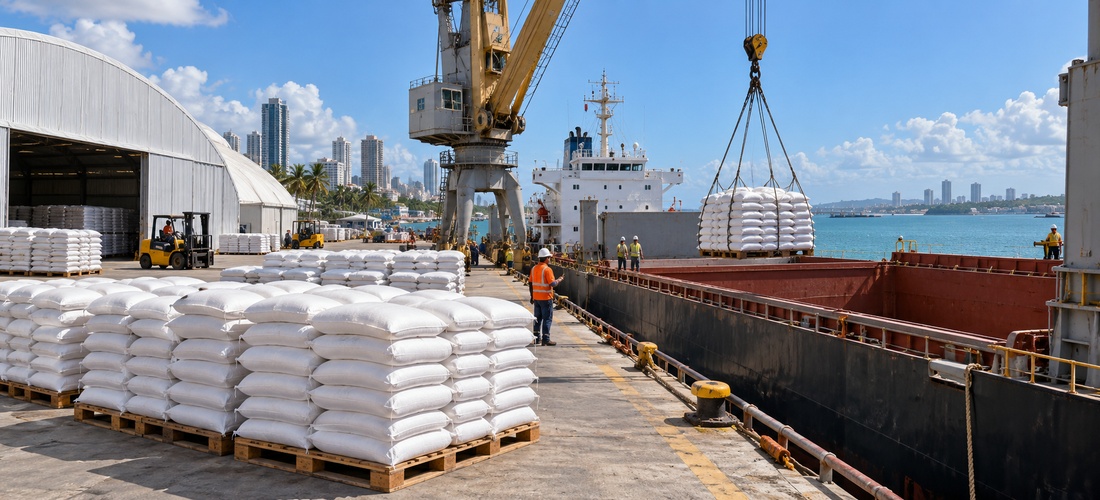
The Port of Recife recorded its largest single shipment of bagged sugar in 2026, loading 22,100 tonnes from a single sugar mill in Pernambuco state. The cargo was loaded aboard the Milos in an operation involving approximately 1,200 trucks between Sept. 25 and Oct. 15, according to information released by the port administration and reported by Movimento Econômico.
The vessel departed the port on Oct. 15 bound for Abidjan, Ivory Coast. The sugar mill responsible for the shipment was not identified.
Inflatable Warehouses Support Port of Recife Sugar Shipments
The volume of sugar delivered by truck required special logistics arrangements at the terminal. Inflatable warehouses installed in the port yard were used to store the bagged sugar ahead of loading.
According to Wagner Maciel, president of the Port of Recife, the facilities serve as a logistics buffer, making it easier to receive cargo and load it onto vessels. His remarks were shared on the port’s social media accounts and subsequently reported by Movimento Econômico.
Each inflatable warehouse can accommodate an average of 7,000 tonnes of sugar. The facilities provide additional temporary storage capacity and help manage cargo flows during larger shipping operations.
As of October 2026, the Port of Recife had handled 156,652 tonnes of sugar, compared with 164,286 tonnes during the same period in 2025, according to figures released by the port administration.
The port’s commercial and operations department expected sugar throughput to surpass the previous year’s level by the end of October. Whether that target is reached will depend on the final consolidated figures for the period.
The Milos operation took place during the transition between sugarcane harvest seasons. In northeastern Brazil, sugar shipments typically run from the second half of the year through the first few months of the following year, reflecting the production cycle and export schedules.
Port Infrastructure and Logistics Capacity
In addition to the availability of sugar for export, cargo handling capacity depends on port infrastructure, storage facilities and inland transportation. The Milos operation brought these elements together in a large-scale shipment involving trucking companies and logistics operators.
The Port of Recife also has infrastructure improvements planned to expand its operational capacity. These include dredging its access channels, with federal funding announced to increase the depth available for vessel navigation. The implementation and results of these projects will be important factors in assessing the port’s future cargo handling capacity.
Source: Paraiba Business
-
Ports and Terminals
Aug, 20, 2025
0
Northeast Brazil ports growth led by iron ore, oil and soy exports
-
Guest Reports
May, 30, 2023
0
ANTAQ, APEC sign MoU to promote expertise exchange
-
Grains
Feb, 08, 2022
0
USDA: Brazil to import 7 million tons of wheat in 2021-22
-
Grains
May, 16, 2023
0
UN efforts to save Black Sea grain deal to continue in coming days