


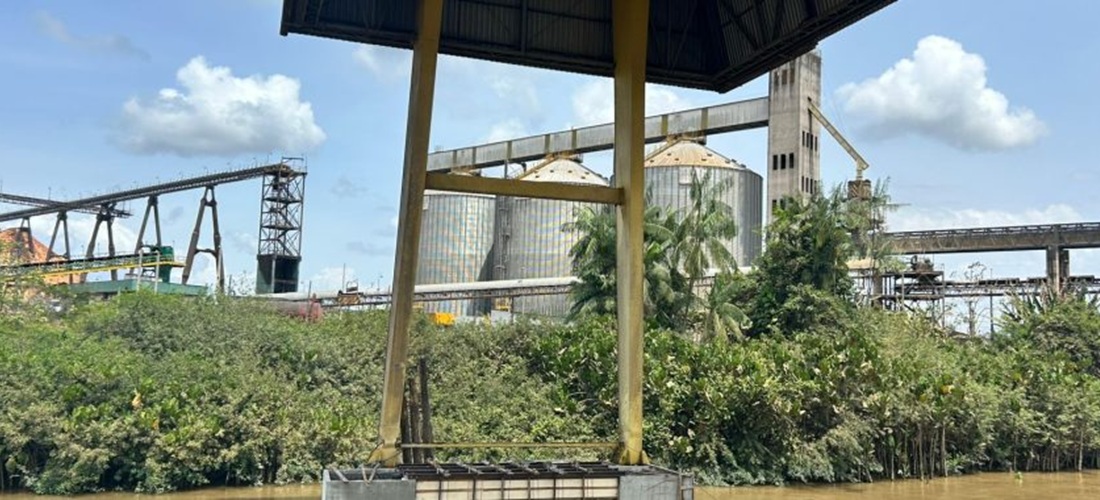
Port of Santana to Receive R$150.2 Million in Modernization Investments
Oct, 26, 2026 Posted by Gabriel MalheirosWeek 202644
Brazil’s Minister of Ports and Airports, Tomé Franca, signed a lease agreement for the MCP01 terminal during a visit to the Port of Santana, in Amapá state, on Friday, Oct. 23. The agreement provides for R$150.2 million in investments over 25 years as part of the ongoing Port of Santana modernization efforts.
Designed to handle and store agricultural dry bulk cargo, particularly soybeans and corn, the project is part of the federal government’s efforts to modernize port infrastructure, expand logistics capacity in northern Brazil and strengthen the flow of Brazilian agricultural production to domestic and international markets.
The terminal was awarded to CS Infra S.A. in an auction held in February 2026. Planned improvements include the installation of conveyor belts and a new shiploader, along with upgrades to piers and landside infrastructure. The signing of the agreement formalizes the conditions under which the winning company will operate the terminal and marks a new stage in the project’s implementation, aimed at improving operational efficiency and reducing logistics costs.
During the ceremony, Franca emphasized the strategic role of the Port of Santana in connecting agricultural producing regions in Brazil’s Center-West with major international consumer markets, particularly through the Northern Arc export corridors.
“We are signing an agreement today involving more than R$150 million for an agricultural bulk terminal handling soybeans and corn. This will give the Port of Santana and the state of Amapá greater capacity and efficiency in moving agricultural production, connecting producing regions, particularly the soybean-producing areas of Brazil’s Center-West, with international markets,” the minister said.
Franca also highlighted the opportunities for economic and social development that expanded port infrastructure could bring to Amapá. According to the minister, investments in modernization and increased operating capacity can help attract new businesses and strengthen the competitiveness of Brazilian agricultural products.
“When we establish a new terminal like MCP01, we are not simply creating another cargo handling facility. We are creating jobs and generating income both here and in the regions where the goods are produced,” he said.
Brazil’s Minister of Integration and Regional Development, Waldez Góes, also attended the event and emphasized the importance of federal investment in addressing Amapá’s logistics challenges and expanding opportunities for regional development.
“Investment in logistics, ports and airports is essential for us. We have to remember that we lack an overland connection. The better our port and airport infrastructure becomes, the more fully we can participate in the development process,” Góes said.
Santana Mayor Sebastião Bala Rocha noted that the new leases represent a change in the port’s investment structure, which had previously relied heavily on temporary and transitional agreements.
According to the mayor, establishing long-term contracts provides greater certainty for investors and supports the modernization of port operations.
“These are investments in the port. Across these three auctions, we are talking about R$300 million to expand existing docks, build new ones and install new equipment, improving cargo handling and creating jobs and income for the local population,” Rocha said.
Edival Cabral Tork, CEO of the Santana Dock Company (CDSA), highlighted the growth in port operations and the increasing recognition of the facility’s potential among federal authorities and private investors.
“We have set cargo handling records for three consecutive years. We can see that the federal government, and especially private companies, are paying much closer attention to our port,” Tork said.
Port of Santana Modernization: Cargo Growth and New Investments
Located on the banks of the Amazon River, the Port of Santana is one of Amapá’s main cargo gateways and forms part of the Northern Arc logistics corridor, which connects agricultural production in Brazil’s Center-West to international markets.
In 2025, the port handled approximately 3.6 million tonnes of cargo, an increase of 13.54% compared with 2024. Its main cargoes include soybeans, timber, corn, soybean oil residues and manganese.
During the first two months of 2026, cargo throughput reached 403,000 tonnes, up 6.52% from the same period a year earlier.
The MCP01 agreement is part of a broader investment program aimed at expanding and modernizing the Port of Santana’s infrastructure. Between 2023 and 2026, the MCP01 and MCP03 terminal lease projects accounted for a combined R$239.1 million in planned investments.
The government also plans to rehabilitate the port’s landside access roads, with an estimated investment of R$11.6 million.
The project involves improvements to approximately 1.2 kilometers of roadways, including the installation of reinforced-concrete pavement designed to improve vehicle circulation and the efficiency of logistics operations.
Construction is scheduled to begin in November 2026, with completion expected in November 2027.
Another measure underway is the extension of the agreement delegating administration of the Port of Santana to the municipality for an additional 25 years.
The initiative would extend the agreement through 2053, ensuring that the municipal government, through the Santana Dock Company, can continue administering and operating the port.
Minister Visits Porto do Povo Passenger Terminal
During his visit to Amapá, Franca also toured Santana’s small-scale public port facility (IP4), known as Porto do Povo.
The facility received approximately R$34 million in federal investment and was designed to improve boarding and disembarkation conditions for passengers who depend on inland waterway transportation in the region.
The visit highlighted the importance of passenger port infrastructure for mobility in the Amazon, where rivers are essential transportation routes for local communities.
“This infrastructure is essential to providing dignified conditions for people who rely on rivers for transportation here in Amapá and throughout northern Brazil,” Franca said.
-
Ports and Terminals
Nov, 14, 2024
0
Port Traffic on the Rise
-
Grains
Dec, 07, 2022
0
Wheat: line-up forecasts shipment of 331,967 K tonnes from Argentina
-
Other Cargo
Jun, 22, 2021
0
Dangote, from Nigeria, will start exporting fertilizers to the US and Brazil
-
Meat
Jan, 18, 2024
0
Argentina Seeks Approval to Export Kosher Beef to Israel