


Portonave celebrates 18 years
Oct, 22, 2025 Posted by Lucas LorimerWeek 202544
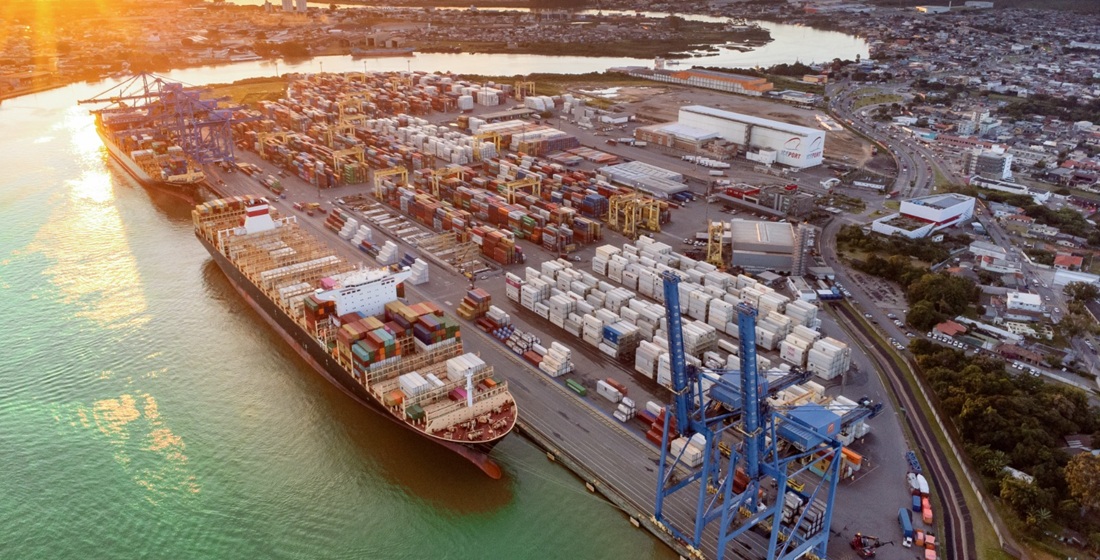
The Port of Navegantes Terminal (Portonave), in Santa Catarina, celebrated 18 years of operation this Wednesday (22). The first private container terminal in Brazil, the facility has handled more than 14 million TEUs since 2007 and currently accounts for 48% of the Santa Catarina market and 13% of national throughput, according to the National Waterway Transport Agency (ANTAQ).
Portonave leads ANTAQ’s efficiency ranking, averaging 118 moves per hour (MPH) on berthed vessels. In 2024, the terminal handled around 1.2 million TEUs and completed 10,000 ship calls.
The port employs 1,300 direct workers and 5,500 indirect ones. Every day, about 2,000 trucks pass through the terminal, with an average operation time of 26 minutes.
In 2024, construction began on a R$1 billion quay expansion project that will allow the terminal to receive larger vessels and install a shore power system to supply electricity to docked ships.
The terminal also operates its own cold storage facility, Iceport, with a capacity for 16,000 pallets, and has invested in electric equipment and solar energy to reduce emissions.
Since 2010, Portonave has voluntarily monitored its greenhouse gas emissions. The terminal has already allocated R$472 million to environmental and social initiatives.
The growth of its operations has boosted Navegantes’ economy, which now ranks 15th in Santa Catarina’s GDP, with R$6.1 billion in 2024. In the same year, the company paid R$37 million in service taxes (ISS), representing 42% of the municipality’s total tax revenue.
Source: Portonave
-
Ports and Terminals
Sep, 11, 2025
0
Brazil ports ministry seeks extension on Santos 10 terminal case, risking delay to record auction
-
Ports and Terminals
Oct, 04, 2022
0
ATP, Antaq sign agreement to promote technical cooperation in private terminals
-
Meat
Jan, 24, 2022
0
Minerva is granted authorization to export beef to the US from unit in SP
-
Meat
May, 27, 2021
0
Recognition by OIE may open new markets for Brazilian meat