


RS Cooperative Invests R$ 500 Million to Reactivate Terminal Damaged by Floods
Jun, 30, 2025 Posted by Denise VileraWeek 202527
The year 2024 was historic for Cooperativa Central Gaúcha (CCGL), based in Cruz Alta, Rio Grande do Sul, for two key reasons. On the positive side, the cooperative achieved a record revenue of R$ 2 billion, allowing it to distribute R$ 28 million in dividends in 2025 to its dairy farmers who delivered raw milk in the previous year.
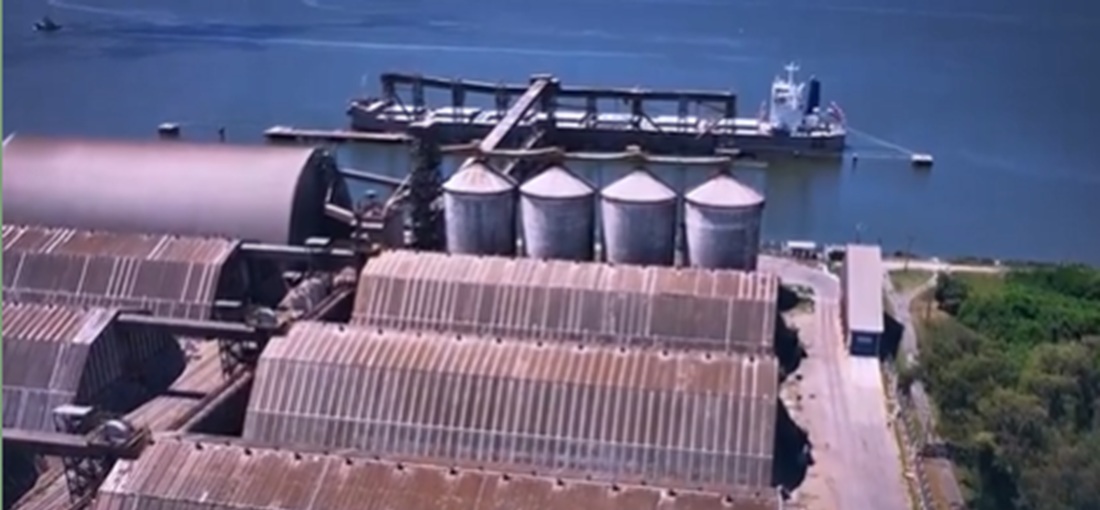
However, 2024 was also marked by a serious incident: on May 6, at the height of the devastating floods in Rio Grande do Sul, a bulk carrier collided with the pier at Termasa, one of CCGL’s grain terminals at the Port of Rio Grande. The impact led to the shutdown of operations at the terminal, which had handled an average of 2 million tons of cargo annually.
To restore Termasa’s operational capacity, CCGL is investing R$ 550 million in renovation works, currently scheduled for completion by October 2026. Of this amount, R$ 321.25 million comes from financing by Brazil’s National Bank for Economic and Social Development (BNDES).
Despite the damage, the situation presented an opportunity to modernize the terminal, which was the first bulk grain terminal in Brazil when inaugurated in the early 1970s. Storage facilities, which can hold up to 320,000 tons, are also being updated, and the terminal’s power system will undergo improvements.
Importantly, all 300 Termasa workers retained their jobs. CCGL transferred operations to a nearby terminal, Tergrasa, which also belongs to the cooperative. “At that time, the employees were terrified — the city of Rio Grande was flooded, and their workplace was inoperable. But we got through the crisis together,” said Guillermo Dawson Junior, CCGL’s CEO.
Together, Termasa and Tergrasa employ approximately 600 people and handle 9 million tons of grain annually. The terminals handle around 70% of all soy exported from Rio Grande do Sul. “We are white-flag terminals. Every grain company in the state that exports end up using our services. Over 50% of agricultural bulk shipments in the state go through us,” Dawson explained.
In addition to funding for the reconstruction works, CCGL also received an emergency loan of R$ 93.46 million from BNDES last year. The funds were used to strengthen working capital, provide liquidity, and support climate adaptation and recovery efforts.
Operations Beyond Logistics
Although CCGL plays a major role in grain logistics in the state, its logistics division accounts for only 30% of its revenue. The remaining 70% comes from its dairy operations, which collect 1.8 million liters of milk daily. The milk is supplied by 2,800 cooperative members and 16 partner cooperatives.
The cooperative’s production primarily focuses on powdered milk under the CCGL and Qualitem brands and also includes cream, condensed milk, chocolate milk, and lactose-free products. Nearly 90% of its production is shipped to Brazil’s North and Northeast regions.
CCGL has also exported powdered milk in the past. “Whenever the dollar and international market are favorable, we export. We’ve sold to Algeria, Venezuela, Cuba, and China. We haven’t exported yet this year, but we expect to do so in the second half when we anticipate having competitive prices and good milk volumes,” Dawson said.
Founded in 1976, CCGL once processed 70% of all milk in Rio Grande do Sul and owned the Elegê brand. In 1996, it sold its dairy assets to Avipal (later Eleva), which was acquired by Perdigão — a company that eventually merged with Sadia to form BRF. Today, those assets are held by France’s Lactalis Group. CCGL re-entered the dairy segment in 2008.
Source: Globo Rural
-
Grains
Mar, 07, 2025
0
Brazil braces for more Chinese demand, higher food prices amid US trade war
-
Grains
Aug, 09, 2023
0
Paraguay President-elect: EU’s environmental demands in trade talks ‘unacceptable’
-
Meat
Mar, 29, 2022
0
Brazil sees another increase in its beef exports to China
-
Portos e Terminais
Nov, 14, 2018
0
Rota 2030 aims to improve energy efficiency by 12 percent