

South Korean HMM declares interest in megaterminal auction at the Port of Santos
Jul, 14, 2025 Posted by Denise VileraWeek 202530
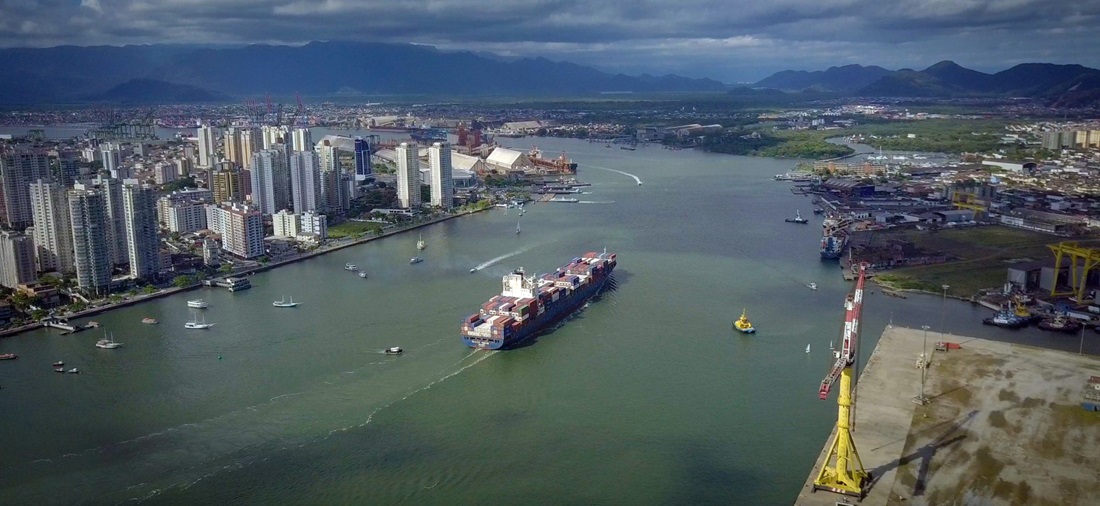
During a meeting last Wednesday (July 9) with Caio Farias, director-general of Antaq (National Agency for Waterway Transportation), executives from South Korean shipping company HMM (Hyundai Merchant Marine) announced their intention to participate in the auction of the Tecon 10 megaterminal at the Port of Santos.
The multinational, which has been operating in Brazil since 2006, is the latest industry player to signal interest in the tender, which, in theory, should take place by the end of this year.
Antaq recommended to the TCU (Federal Court of Accounts) that the auction be held in two phases. In the first, shipowners (the vessel operators) that already own terminals in Santos would be prohibited from submitting bids. They would only be allowed to participate in a possible second round.
The restriction affects the three largest global players in the sector: MSC and Maersk are partners in BTP, a terminal located within the organized port, and CMA CGM, which last year acquired Santos Brasil, the largest container handling terminal in the region.
If the TCU follows Antaq’s recommendation, Maersk and MSC are expected to try to block the auction in court. This is the concern of other participants, according to sources consulted by the report. A legal dispute could further delay the concession, which was initially expected to happen two years ago. At the same time, pressure from the federal government in favor of the auction is expected.
“HMM’s objective is not only to increase its regular container services to Brazil but especially to expand its activities as a container terminal operator in the country. Just as we already operate in countries such as the Netherlands, the United States, Singapore, and South Korea, among others.
We wish to expand our presence in the Brazilian market,” said Hyundai Brasil CEO Shangdai Lim to Folha.
In terms of TEU (20-foot container) transport capacity, it is the eighth largest company in the world in the sector.
Another shipowner interested in the process is the Filipino ICTSI, which operates terminals in Rio de Janeiro and at the Port of Suape in Pernambuco.
Last week, the company presented to the Secretariat for Economic Monitoring and Regulation of the Ministry of Finance a study commissioned from LCA Consultoria Econômica. The document provides figures and data to support Antaq’s argument that the best model for Tecon 10 is a two-phase auction.
“The holding of the tender in two stages, as unanimously recommended by Antaq’s board and technical team and supported by the Ministry of Ports and Airports, is pro-competitive and not only aligned but essential to achieving public policy objectives of fostering greater competition and efficiency in the container market at the Port of Santos,” the document states.
“When analyzing such operations, one of the first questions is: would there be any incentive for them [Maersk, MSC, and CMA CGM] to restrict the market? Yes. They would have economic incentives,” said Bernardo Gouthier, managing partner at LCA.
Antaq’s main argument for the restriction is related to competition policy — to prevent market concentration at the Port of Santos under a single company.
Other national and international companies are also preparing to submit bids in the auction. This confirms the fears of the shipowners excluded from the first phase that they may be left out of the process. There may be no second round.
DPW, which has a terminal in Santos but is not a shipowner, Chinese company Cosco, and JBS Terminais are also interested, according to Folha. If the restriction is lifted, CMA CGM does not rule out participating.
They may present solo bids or partner in consortia with other port operators.
Maersk and MSC, affected by Antaq’s model, argue that the restriction makes no sense, as it reduces competition and the value of the concession fee to be received by the federal government. They argue that, in practice, there is no market concentration since their vessels continue to carry cargo for other terminals in Santos, not just BTP. Maersk, for instance, is the largest client of Santos Brasil.
The São Paulo state government sent a letter to the Ministry of Ports and Airports condemning the restriction and the two-phase auction model. It requested free competition. The president of the Santos Port Authority, Anderson Pomini, also supports allowing all interested parties to participate from the first round.
Danish company Maersk and Swiss company MSC are also pressuring the federal government, especially the Ministry of Ports and Airports. Less than 60 minutes before a scheduled meeting on June 25 with ambassadors from Denmark, Switzerland, and the Netherlands representing the European Union, Minister Silvio Costa canceled his attendance.
The official explanation from the ministry was that President Lula had summoned him for an institutional meeting with the president of Benin.
A Maersk representative found the explanation curious since Brazil has no port or airport interests in the African country.
Silvio Costa was also summoned to provide clarifications to the National Commission of Foreign Relations and National Defense in Congress about the diplomatic and economic impacts of the Tecon 10 bidding process. The minister reiterated his defense of the current model.
Tecon 10 will be located in the Saboó district of Santos, covering 622,000 square meters. The project is for a multi-purpose terminal handling both containers and breakbulk cargo. The auction will follow a highest-bid model: the winner will be the one offering the highest amount for the right to build and operate it.
The terminal will have a handling capacity of 3.5 million TEUs per year (each TEU represents a 20-foot container or about 6 meters). It will be the largest terminal of its kind in the country.
There will be four berths (where ships dock to load and unload cargo). The projected investment over the 25-year concession could reach R$ 40 billion.
Source: Santa Portal
-
Ports and Terminals
Dec, 10, 2018
0
Itaqui Port forms agreement with Panama Canal
-
Ports and Terminals
Aug, 22, 2024
0
Agribusiness Fuels Record Cargo Growth at Port of Santos in July
-
Shipping
Dec, 22, 2021
0
‘BR do Mar’ could lead to 4% reduction in basket of goods
-
May, 29, 2024
0
Norwegian ship brings 12,469 tonnes of krill to Uruguayan shores