


Trump and Xi reach limited trade accord as rare-earth restrictions end
Oct, 30, 2025 Posted by Lucas LorimerWeek 20252045
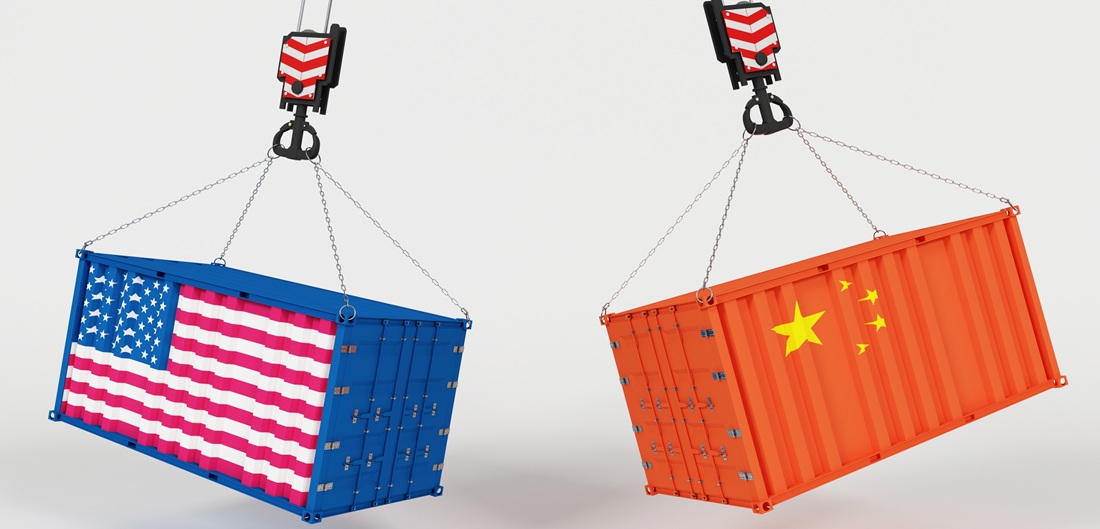
U.S. President Donald Trump and Chinese leader Xi Jinping met on Thursday and agreed to a one-year truce in the trade war. It was the first face-to-face meeting between the two since 2019. The agreement includes reducing tariffs on Chinese products, ending Beijing’s control over rare earth exports, and resuming purchases of American soybeans. Left out of the deal were Nvidia’s new superchip, the Blackwell, and TikTok’s future in the United States.
China’s commitments:
- Suspend controls on exports of rare-earth magnets. Beijing had sharply tightened these export restrictions earlier this month.
- Suspend special port fees applied to U.S. ships.
- Resume purchases of American soybeans.
U.S. commitments:
- Reduce the average import tariff on Chinese goods from 57% to 47%.
- Cut the tariff on fentanyl-related products from 20% to 10%, with immediate effect.
- Withdraw the threat to impose a 100% tariff on imports from Beijing. Trump had threatened to apply this tariff starting in November.
- Suspend special port fees applied to Chinese vessels docking at U.S. ports.
Trump and Xi spoke for about an hour and a half. Shortly after the meeting, the U.S. president left South Korea. Neither leader gave public statements at the venue, but aboard Air Force One, Trump announced that an agreement had been reached and commented on the meeting.
“I would say, on a scale of zero to ten, with ten being the best, I’d give it a twelve,” Trump told reporters aboard Air Force One after the meeting with Xi in Busan, South Korea. “The whole relationship is very, very important. I think it went really well.”
He added:
“Everything related to rare earth elements has been resolved, and that’s good for the world.”
China had imposed restrictions on rare-earth exports after Trump announced a tariff hike in April. The Asian giant virtually monopolizes the production of these materials, which are essential for industries such as technology and defense.
Regarding fentanyl, Trump had imposed tariffs on a list of Chinese products in retaliation for what he called Beijing’s lack of effort to curb the illegal flow of the drug into the U.S.
The U.S. president accuses China, Mexico, and Canada of not doing enough to stop the illegal trafficking of narcotics. Fentanyl is the most potent synthetic opioid painkiller available for medical use, but it is also smuggled and abused by drug users.
According to CNN, the trade deal will be signed soon.
“We have a deal. From now on, we’ll renegotiate it every year, but I think this deal will last a long time. It’s a one-year deal, and we’ll extend it after a year,” Trump said.
Chips and TikTok left out
Despite the agreement covering major areas, at least two issues were left unresolved: chips and TikTok. There had been expectations that the two leaders might reach a consensus on the supply of advanced semiconductor lines to China, such as Nvidia’s Blackwell chip.
Trump said only that he planned to speak with the company’s CEO, Jensen Huang, without indicating that any deal had been reached.
As for TikTok, China’s Ministry of Commerce said Thursday that it was committed to properly resolving the matter but did not provide further details.
Trump’s plan calls for creating a new company to take over TikTok’s U.S. business, majority-owned by American investors, while the Chinese parent company ByteDance would see its share reduced to under 20%. This structure would comply with a U.S. national security law.
Next meeting
Trump and Xi met in Busan, South Korea, near Gyeongju, where regional leaders were attending the Asia-Pacific Economic Cooperation (APEC) summit.
Trump called Xi a “very tough negotiator” as they shook hands. Xi said the two “must be partners and friends” and can “jointly assume their responsibility as major countries and work together to achieve greater and concrete results.”
During the closed-door bilateral meeting, each leader was joined by senior officials, including U.S. Secretary of State Marco Rubio and China’s Foreign Minister Wang Yi.
Trump said he will visit China in April next year and confirmed that Xi will visit the U.S. sometime afterward.
Nuclear testing
Shortly before meeting Xi, Trump announced the resumption of U.S. nuclear testing in response to Russia and China. Russian President Vladimir Putin had announced the day before that Moscow successfully tested a nuclear-powered submarine drone, defying Washington’s warnings.
On his social media platform, Trump added that, in terms of nuclear arsenals, China ranks “a distant third” behind the U.S. and Russia, “but within five years it will be at the same level.”
According to the Bulletin of Atomic Scientists, China’s last nuclear test took place in 1996, and the U.S. last conducted one in 1992.
With AFP
Source: O Globo
-
Meat
Dec, 28, 2022
0
US breaks beef export record to East Asia
-
Grains
Jul, 07, 2021
0
Brazil increases cotton exports, already totaling US$ 3.67 bi for 2020/21
-
Coffee
Jul, 10, 2026
0
US coffee industry asks Trump to keep tariff exemption on Brazil beans
-
Other Cargo
Mar, 13, 2024
0
Government inspection to assess imported milk use in Brazil