


Trump’s Tariff Surge and EU Law Disrupt Brazil’s Agribusiness Geopolitics
Jul, 14, 2025 Posted by Denise VileraWeek 202530
As Brazil prepares to comply with the European Union’s anti-deforestation law, which will take effect in January 2026, the country’s agribusiness sector is now facing a second major challenge: a 50% tariff on exports to the United States.
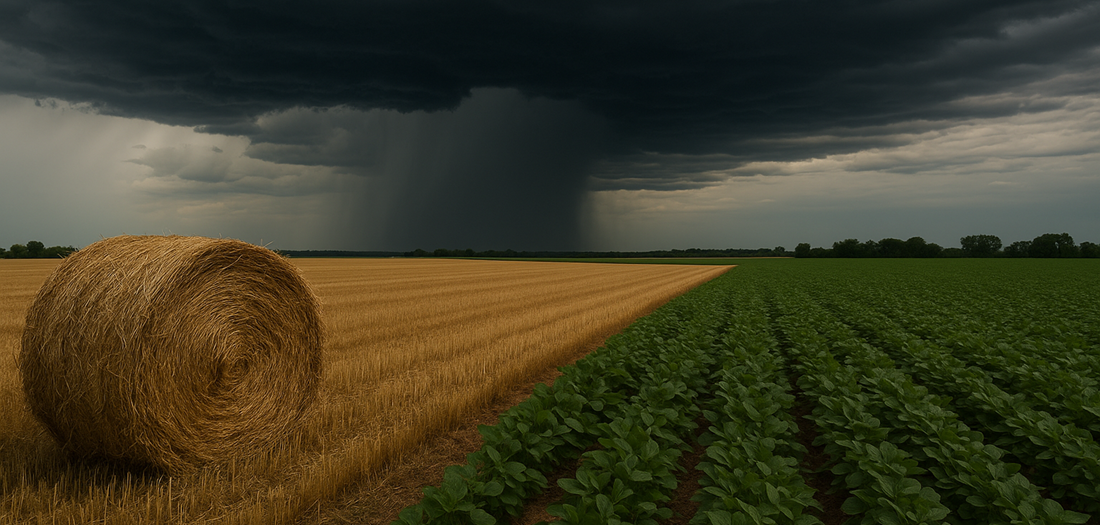
The situation has worsened, creating what experts in foreign trade and seasoned diplomats are calling a “perfect storm.” Brazil’s agricultural exports to two of its largest clients—the U.S. and the EU—risk becoming unfeasible or losing competitiveness.
According to Ambassador Rubens Barbosa, president of the Institute of International Relations and Foreign Trade (Irice), the trade tensions with the U.S. are more serious than the impacts of the EU law and pose a more immediate concern for Brazil.
He points out that in the dispute with the U.S., agribusiness is not the most affected sector of Brazil’s economy. Barbosa believes the aviation industry and sectors like aluminum and steel have more to lose due to their reliance on exports of value-added goods or advanced technology, while agribusiness is primarily a commodity exporter.
“There will be consequences—we don’t yet know what tariff level Brazil will end up negotiating with the U.S. But even if it’s higher than the previous 10%, we could still remain competitive in exporting agricultural products. But it must be negotiated,” he told Valor.
Still, for some products, exports would become unviable. According to projections by Agrifatto, the price per ton of beef could rise by around US$3,000. Coffee, orange juice, and eggs would also see significant export disruptions.
The U.S. is one of Brazil’s key trading partners. In 2024, it accounted for 12% of Brazil’s exports and 15.5% of its imports. “If Brazil escalates into retaliatory measures, like China did, it could suffer consequences. We have more to lose than to gain,” warned Cícero Zanetti de Lima, a researcher at FGV’s Agribusiness Center (FGV Agro).
See below the main goods exported via containers to the United States in May 2025. The chart was created using DataLiner data:
Top 10 Products Exported by Containers to the United States | May 2025 – TEUs
Source: DataLiner (click here to request a demo)
Roughly 30% of Brazil’s exports to the U.S. are agricultural—worth US$12.1 billion. Conversely, the U.S. provides 2.5% of Brazil’s agricultural imports, primarily inputs. According to Lima, pricier American inputs could drive up food costs domestically.
“Another serious issue is that with the tariff in place, it’s very hard to redirect our coffee and orange juice originally intended for the U.S. to other markets. That’s a red flag,” said the expert.
Like the U.S., the EU is also a major buyer of Brazilian coffee and orange juice. Amid growing signs of protectionism, the European Commission has classified Brazil as a “standard risk” country under its anti-deforestation regulation (EUDR), which will ban imports from both legally and illegally deforested areas—even if Brazilian law permits such activity.
Uncertainty remains about the documentation required and how the law will be enforced. Former finance minister and diplomat Rubens Ricupero highlighted Brazil’s vulnerability to deforestation concerns. He argued this could be a key opportunity to eliminate illegal deforestation and improve the country’s risk profile. “The sector itself should mobilize to show it is serious about addressing the issue,” he noted.
Because of its “standard risk” status, Brazilian products may be deprioritized compared to those from lower-risk countries, warned Rodrigo Lima, managing partner at Agroicone.
“Importers will look to source from the lowest-risk countries to avoid penalties during EU audits,” he explained. “Even knowing Brazil produces excellent coffee, buyers may prefer to import from a lower-risk competitor.” Vietnam, for example, is a low-risk coffee supplier.
Marcos Matos, executive director of the Brazilian Coffee Exporters Council (Cecafe), said representatives from the coffee sector traveled to the EU in May, following Brazil’s risk classification under the EUDR, to advocate for a regional rather than national risk assessment. “We found there is room to build understanding of Brazilian coffee and regional differentiation,” he said.
In the beef supply chain, competitors like Uruguay were classified as low-risk, while Brazil’s “standard risk” status was seen as unfair by Caio Penido, president of the Mato Grosso Institute of Beef (Imac), who recently visited Brussels to address the issue.
Source: Globo Rural
-
Shipping
Aug, 23, 2021
0
Even Given returns to the Suez Canal five months after blocking it
-
Ports and Terminals
Aug, 10, 2023
0
Brazil gov’t to auction off five port areas on Friday, August 11
-
Ports and Terminals
Nov, 04, 2022
0
Santos mayor wants representatives from elect-government participating in the Port of Santos privatization
-
Grains
Oct, 25, 2024
0
US corn export sales post multiyear highs, even without China