


U.S.-Argentina trade deal tests Mercosur, puts Brazil at a crossroads
Feb, 12, 2026 Posted by Gabriel MalheirosWeek 202607
The Reciprocal Trade and Investment Agreement (ARTI) between the United States and Argentina, announced last Thursday, may pose a series of incompatibilities—or outright problems—for Mercosur. It has opened the door within the bloc, and it would not be surprising if Paraguay were to follow the path of the Javier Milei government.
The agreement between Washington and Buenos Aires compels Brazil to decide how to respond to a precedent rather than to an isolated case.
Argentina has signed a bilateral agreement with the United States that includes market-access preferences, such as quotas, sanitary equivalency, and regulatory facilitation, in the meat sector.
The relevant Mercosur rule is Decision CMC 32/00, which establishes the joint conduct of trade negotiations with third parties, covering both tariff and non-tariff instruments.
Article 1 states: “To reaffirm the commitment of the Mercosur States Parties to negotiate jointly trade agreements with third countries or blocs of countries outside the zone in which tariff preferences are granted.”
Article 2 further provides: “As of June 30, 2001, the States Parties shall not sign new preferential agreements or grant new trade preferences under existing agreements within the framework of ALADI that have not been negotiated by Mercosur.”
Decision 32/00 has no automatic enforcement mechanism, but it remains formally in force and has never been revised or repealed.
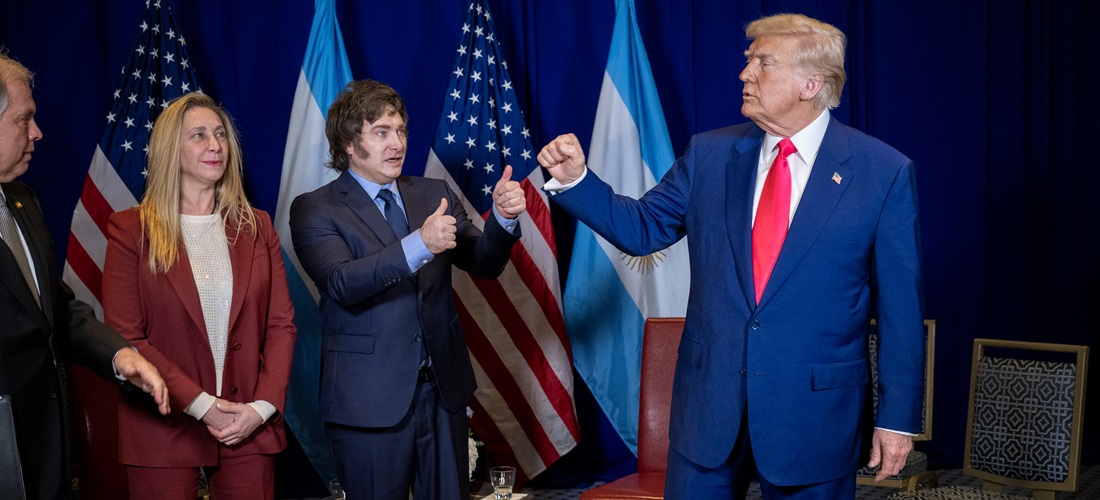
Mercosur’s regular meeting in March is expected to provide some indication of how the other partners will react to the Trump-Milei agreement. Member countries say they are still studying the understanding reached between Washington and Buenos Aires.
The agreement was designed to shift the focus of external tariff coordination toward sanitary and phytosanitary (SPS) measures, quotas, and regulatory commitments, exploiting gray areas between legal form and economic effect, as noted by a leading expert.
Argentina is clearly betting on Mercosur’s limited institutional capacity to respond and on the reluctance of its partners—Brazil, Paraguay, and Uruguay—to escalate the conflict.
For its part, the United States, under Donald Trump, has been pursuing a trade policy that prioritizes functional bilateral agreements over bloc-to-bloc negotiations.
In the U.S.-Argentina agreement, the breach of Mercosur’s Decision 32/00 in the meat chapter is material, not merely interpretative, according to a senior specialist.
The negotiated sanitary equivalence, combined with preferential quotas, constitutes a classic instrument of preferential market access, even though it does not formally alter Mercosur’s Common External Tariff.
SPS measures cease to be technical when they determine who may export, in what volumes, and at what cost, effectively operating as instruments of external trade policy.
The assessment is that Argentina’s defensive legal argument can be sustained only if Mercosur accepts that legal form prevails over economic substance—an outcome that would significantly narrow the effective scope of external coordination.
The central risk is precedent: accepting this arrangement in the meat sector would open the door to its replication in other sectors.
What path, then, should Brazil take in this scenario? The U.S.-Argentina agreement opens up two possible strategies, each with distinct costs.
Defensive strategy
This would involve formally challenging Argentina within Mercosur, focusing on the meat chapter and the principle of joint negotiations.
The argument is to preserve the normative force of Decision 32/00 and to contain the precedent.
The cost is evident: bilateral political friction and a low likelihood of practical reversal, given Milei’s clear strategic alignment with the United States.
Offensive strategy
This would entail treating Argentina’s initiative as an operational precedent and using it to enable Brazil to enter into similar bilateral agreements with other partners. The benefit would be expanded space for Brazilian trade policy. The cost, however, would be the explicit acceptance of a weakened external coordination framework and the opening of equivalent space for Uruguay and Paraguay.
The conclusion is clear: the Argentina-United States agreement forces Brazil to respond to a precedent, not merely to an isolated episode. Challenging the deal preserves the rule but exposes institutional limitations. Replication broadens commercial options but, in practice, redefines the scope of Mercosur’s common trade policy.
The agreement
The Office of the United States Trade Representative (USTR) says the agreement announced on February 5 will “provide U.S. exporters with unprecedented access to the Argentine market, while protecting U.S. national and economic security.”
The Milei government says it secured the elimination of tariffs on 1,675 Argentine products entering the U.S. market, including wine, lemons, and others.
In the specific case of beef, the United States will grant an additional quota of 80,000 tonnes, on top of the existing reduced-tariff quota of 20,000 tonnes, generating gains worth several hundred million dollars for Argentine exporters.
Argentina, in turn, will grant preferential market access to U.S. exports, including certain pharmaceuticals, chemicals, machinery, information technology products, medical devices, motor vehicles, and a wide range of agricultural goods.
The Milei administration has also opened the Argentine market to U.S. live cattle and will adopt measures to allow access for poultry and poultry products within one year of signature, including a regionalization agreement for potential outbreaks of highly pathogenic avian influenza.
Argentina also agreed to recognize the authority of the U.S. Department of Agriculture’s Food Safety and Inspection Service (FSIS) for meat and poultry products (including offal) and refrigerated storage facilities, and to accept FSIS export certificates.
Specifically, SENASA will ensure that any registration procedures applied to U.S. beef, beef products, offal, and pork as a condition for importation “are conducted in a timely, transparent and non-discriminatory manner, without causing unnecessary delays.”
There are several other concessions. As the USTR notes, the agreement “reflects the ambition and shared values” of both countries.
Source: Valor International
-
Meat
Feb, 24, 2023
0
Meatpackers resort to neighboring countries to meet Chinese demand
-
Ports and Terminals
Oct, 24, 2023
0
Itajaí Port Complex records 1.3 million tonnes in September
-
Meat
Jul, 27, 2022
0
Brazil’s Minerva sees zoonotic risks unjustifiably blocking trade
-
Ports and Terminals
Jun, 23, 2026
0
Port of Rio Grande sets record as grain exports surge