


Villa Germania diversifies with duck feather exports to Europe
Dec, 30, 2025 Posted by Sylvia SchandertWeek 202553
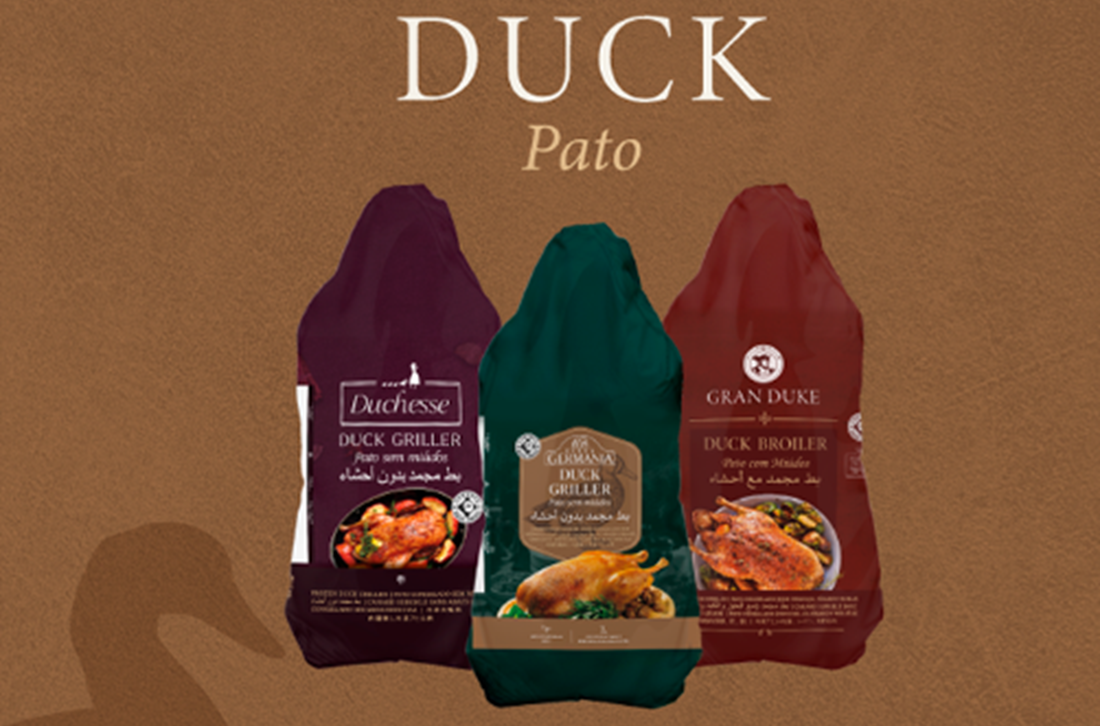
Avian flu and pressure from Chinese products in international markets weighed on revenues this year at Villa Germania, Brazil’s largest producer and sole exporter of duck, quail, and organic chicken meat. In March, however, the Santa Catarina-based company began shipping duck feathers to Europe, a product that could generate significant returns in the coming years.
According to company president Marcondes Moser, Villa Germania exported seven 10-tonne containers of feathers this year, mainly to Italy. The new business is expected to account for 3.5% of revenue next year. The feathers are sold by the kilo and shipped in dry containers. Before export, they are washed, disinfected, heat-treated, dried, and compressed into bags.
“In Brazil, we sell them for R$6 to R$9 per kilo for use in pillows,” Moser explains. “Italy also uses the product for pillows, but it is widely applied in the fashion industry, such as for coat lining, and sells for R$30 per kilo.”
Based in Indaial, Santa Catarina, the company initially projected revenue growth of 10% this year. That outlook was undermined by embargoes imposed by several countries on Brazilian poultry after an avian flu outbreak was identified in May at a commercial farm in Montenegro, in the state of Rio Grande do Sul. Sales of Villa Germania’s gourmet products in the domestic market, however, helped offset lost exports. As a result, revenue reached R$120 million, virtually unchanged from 2024, Moser says.
He notes that 2025 was an atypical year, as exports had accounted for about 70% of revenue in previous years. Following the outbreak in Montenegro, several countries—including Iraq, the Philippines, Mexico, and Chile—temporarily suspended imports of duck meat, he says. At the same time, China intensified its duck meat exports to markets also served by Villa Germania.
“We saw a 10% drop in both prices and volumes, but in the second half of the year the scenario began to improve, and we are now ramping up production,” Moser notes. “For next year, we are projecting a 25% increase in exports.”
Villa Germania slaughters poultry in accordance with halal standards, and its main customers are Saudi Arabia and other Middle Eastern countries. The company currently holds more than 20 export licenses for duck meat, its core product, and is in talks to open bilateral trade with China.
Villa Germania’s strategic focus, however, remains on exporting duck meat to the European market, which offers greater volumes and higher prices. At present, aside from feathers, the company exports only liver, backs, and other duck by-products to Europe, where they are used in the manufacture of pet food.
At its slaughterhouse in Indaial, which has a capacity to process 50,000 birds per day, the company—controlled by holding firm XWR Investimentos—is currently handling about 15,000 birds per day, including ducks and organic chickens. At the Good Alimentos unit in Coronel Freitas, which processes quails, daily slaughter reaches 20,000 birds. However, installed capacity is five times higher.
Duck production operates under an integrated model with 90 poultry farmers, who receive birds and inputs for rearing. Quail production, by contrast, is vertically integrated on the company’s own farm, which includes breeding stock, aviaries, and a slaughterhouse.
According to Moser, the company expects to begin exporting quail meat next year to Middle Eastern countries, where demand exists for the protein as feed for racing falcons.
High interest rates have led Villa Germania to postpone this year a planned R$15 million investment in a storage and supply center in Indaial, Moser says. Even so, the company plans to build a new factory to process duck feathers in the coming years.
In the domestic market, the strongest demand for duck meat comes from restaurants and supermarkets in São Paulo, followed by cities in Santa Catarina that prepare the traditional dish that gave rise to Villa Germania—stuffed mallard—and by Pará, where duck with tucupi is particularly popular.
According to the Agrostat System of the Ministry of Agriculture and Supply, Brazil exported 2,030 tonnes of duck meat by November this year, generating revenue of $6.79 million. That represents a 33.7% drop in volume compared with the 3,070 tonnes exported over the same period last year, alongside a 35.18% decline in revenue. More than half of Brazilian duck meat exports are destined for the Middle East.
Source: Valor International
-
Ports and Terminals
Apr, 17, 2026
0
JBS Terminais expands operating capacity by 330% at the Port of Itajaí
-
Ports and Terminals
Oct, 22, 2021
0
State of SP studies new highway from the plateau to the Port of Santos, SP
-
Economy
Oct, 03, 2024
0
New Export Markets: Paraguay Expands International Presence with Six Products in August
-
Oil and Gas
Aug, 27, 2020
0
Reduc carries out first cabotage operation of Diesel S10