


War drives million-dollar costs for Brazil’s meat exporters
Mar, 06, 2026 Posted by Sylvia SchandertWeek 202610
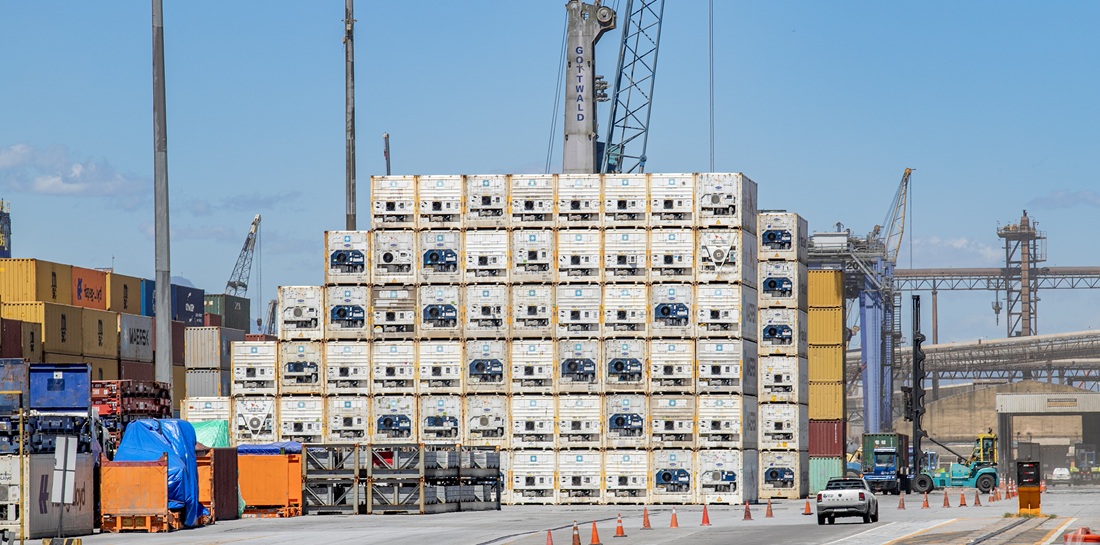
Each day a refrigerated container ship is forced to wait while seeking alternative routes around risk zones in the Middle East can add as much as $570,000 in extra costs for Brazilian exporters, solely in demurrage penalties for delays in unloading.
Since the outbreak of war involving the United States and Israel against Iran, seaborne meat shipments have been among the most affected, facing higher logistics expenses. In addition to demurrage, cargoes are also subject to war-risk charges and itinerary-diversion fees, which are higher for refrigerated containers.
Demurrage is a daily fee charged by a shipowner to the charterer when a vessel remains berthed longer than the contracted time.
In general, demurrage can cost $325 to $475 per day for a 40-foot refrigerated container, Macroinfra Consultores estimated. That means if the delay lasts two weeks, for example, the penalty can reach $6,400 per container over the period.
Olivier Girard, a director at Macroinfra, noted that ships that typically operate in Brazil can carry between 800 and 1,200 refrigerated containers in a single voyage. Considering a ship loaded with 1,200 containers and a demurrage rate of $475, the daily cost would be around $570,000.
“This [demurrage] amount varies depending on the carrier, ship size, the cause of the delay, the volume being transported, the type of cargo, the contract signed, among other criteria,” Girard said.
Risk perception
Researchers at Insper Agro Global said that, alongside demurrage expenses, war-related logistics costs have also been driven by route diversions, higher risk perception and increased insurance premiums for maritime transport. “The result is an expansion of operating expenses throughout the chain,” Insper said in a study.
The conflict triggered a blockage of navigation through the Strait of Hormuz, between the Persian Gulf and the Gulf of Oman, through which at least 20% of global oil production flows, as well as other goods headed to and from the Middle East. Insper said the war also puts maritime flows at risk through the Bab el-Mandeb strait, which provides access to the Suez Canal in Egypt.
On Thursday (5), MSC, one of the world’s largest shipping companies, began applying a War Risk Surcharge (WRS) to all cargo leaving the Arabian Peninsula for West Africa, East Africa, South Africa, Mozambique and the islands of the Indian Ocean. The fee is $4,000 per refrigerated container, $3,000 per 40-foot container and $2,000 per 20-foot container.
MSC also declared the end of the voyage for all shipments currently under its custody, on land or at sea, bound for ports in the Persian Gulf. “A mandatory surcharge of $800 per container will be applied to all affected shipments, without exception, to cover diversion costs,” it said on its website. The company said all in-transit shipments will be diverted to the next safe port for discharge and that there may be other costs “of the cargo’s sole responsibility.”
Maersk, meanwhile, has suspended bookings since Thursday for refrigerated cargo originating from, destined to, or in transit to the United Arab Emirates, Oman, Iraq, Kuwait, Jordan, Qatar, Bahrain and Saudi Arabia.
The United Arab Emirates, Saudi Arabia and Iraq are Brazil’s three top destinations for chicken exports, respectively.
Passage via Hormuz
Hapag-Lloyd and CMA CGM were among the first carriers to suspend transits through the Strait of Hormuz and apply war-risk surcharges, effective since March 2. Hapag-Lloyd’s fee is $1,500 per TEU (twenty-foot equivalent unit) for standard containers, while refrigerated containers are charged $3,500 per unit. CMA CGM’s surcharge reaches $4,000 per refrigerated container.
“We understand these measures may impact your logistics and supply chain operations; however, they are necessary steps that also entail additional operating costs,” CMA said in a note.
Both companies have also suspended bookings of refrigerated containers bound for Middle Eastern countries such as the United Arab Emirates.
William Adib Dib Junior, president of the Arab Brazilian Chamber of Commerce, said there is no expectation of an interruption in cargo shipments to the region. “About 75% of Brazilian exports [to the Arab market] are food, products considered essential. Alternative routes must be found,” he told Valor.
He said the main effect is indeed higher costs due to the need for different logistics. One route option being assessed is via the Gulf of Oman.
Source: Valor International
-
Shipping
Mar, 24, 2025
0
Hacker group claims to have knocked out comms on 116 Iranian vessels
-
Shipping
Dec, 22, 2023
0
HMM announces US$1,500 GRI from India to East Coast of Latin America
-
Grains
Apr, 15, 2025
0
Soy trade war to squeeze margins of Brazil’s processing industry
-
DW 2020 EN
Jan, 20, 2020
0
DATAMARWEEK 21st JANUARY 2020