

What’s behind the global grain rally?
Sep, 18, 2026 Posted by Gabriel MalheirosWeek 202638
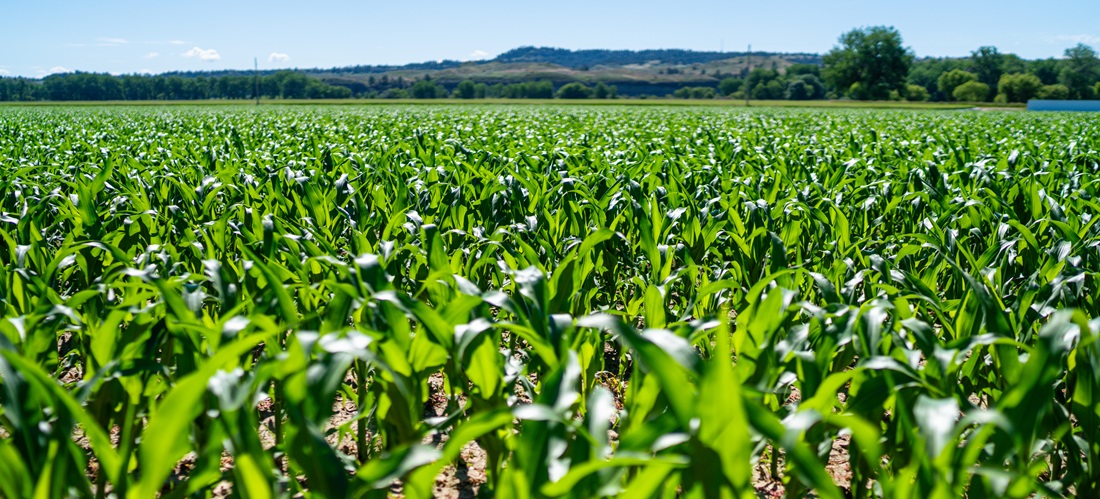
U.S. farmers have just begun harvesting another huge corn crop, following last year’s bumper harvest. But that apparent abundance in the top corn exporter masks a considerably less comfortable picture of world grain supply.
Global corn consumption is forecast to exceed production by nearly 30 million metric tons in 2026/27. According to the U.S. Department of Agriculture’s (USDA) World Agricultural Supply and Demand Estimates, opens new tab released last Friday, the deficit would be the largest in more than three decades.
Those supply concerns have already made an impression on prices. Corn, wheat and soybean futures have risen significantly in recent months, with Chicago corn staging a record 16% rally in August alone, a time when prices are often under seasonal pressure.
So why are global grain supplies tightening when U.S. farmers are producing so much?
Part of the answer lies elsewhere in the world, and even outside grains themselves.
GLOBAL GRAIN CUSHION THINS
Combined corn and wheat production among major exporting countries is set to fall sharply from last year, even as U.S. farmers begin bringing in their second-largest corn crop on record.
The projected year-on-year decline across those exporters is the largest by volume since 1993/94 and the steepest percentage drop since 2012/13, a season marked by heavy U.S. drought losses.
Although crop prospects have recently improved for some key wheat exporters, that has not erased the broader setback in exportable grain supplies. And beyond the major exporters, total world wheat production, like corn, is also expected to fall short of consumption in 2026/27.
Export availability is another concern: combined Russian and Ukrainian wheat stocks are projected by the USDA to hit a 33-year high, as the war between the two leading suppliers continues to disrupt Black Sea trade.
And the challenge may extend beyond this season.
GRAINS LOSING THE ACREAGE BATTLE
Over the last quarter-century, the world’s major agricultural exporters have dramatically expanded oilseed plantings, while grain acreage among key suppliers has stagnated.
Harvested area across major oilseed and oilseed product exporters in 2026/27 is more than double its 2000/01 level. Major grain exporters have expanded acreage by just 5%.
A closer look reveals that corn acreage has expanded substantially over that period, though wheat acres have contracted. In other words, the acreage constraint is not uniform across grains, but the overall contrast with oilseeds is unmistakable.
Yet grain demand continues to grow. Yield improvements have carried an enormous share of the burden, leaving less room for weather disappointments in years when grain acreage is relatively small.
Oilseeds are on the other side of the coin. Expanding acreage, particularly in Brazil, has been central to the explosion in global soybean production.
But even there, acreage growth may be slowing.
BRAZIL HITS THE BRAKES
Brazil’s statistics body, Conab, on Tuesday issued its first 2026/27 soybean outlook, forecasting yet another record crop in the world’s leading exporter. But only fractionally so.
Brazilian farmers are expected to expand soybean plantings at the slowest rate in 20 years as weaker margins, expensive credit and fertilizer costs curb their appetite for more acres.
Add in what experts say could be the strongest El Niño on record, which threatens yields in top-producing Mato Grosso, and Brazil could be unusually vulnerable to an output decline.
The market isn’t used to that. For years, it could count on Brazil adding substantial acreage almost regardless of what happened elsewhere, often diluting the impact of year-to-year yield swings.
The grain story extends to Brazil, too. Conab sharply raised its 2025/26 domestic corn consumption estimate on stronger ethanol demand, meaning less of the country’s huge crop is available for export.
Foreign trade data from Datamar show that although nearly 21% of Brazil’s corn exports were shipped through the Port of Santos, key ports in the Arco Norte corridor also posted strong growth. The Port of Vila do Conde recorded a year-over-year increase of nearly 58%, while Santarém was up 18% year to date.
The chart below shows the market share of Brazil’s main corn export ports:
Corn Exports by Port | Brazil | Jan-Jul 2026 | WTMT
Source: DataLiner (click here to request a demo)
Brazil is expected to harvest another record corn crop in 2026/27, but the demand shift is a reminder that bigger crops do not necessarily translate into equally large gains in exportable supply.
SOLVABLE IN 2027?
None of this necessarily points to the kind of grain scarcity seen in 2012.
The U.S. still has a respectable corn supply buffer, Brazil remains capable of producing record crops and wheat is harvested around the world throughout the year.
But the point still stands: global grain stocks are a lot less comfortable than a year ago, and the recent rally makes clear that markets have noticed.
Exceptionally weak wheat prices helped U.S. farmers go big on corn and soybeans in 2026, pushing all-wheat plantings to a record low. Wheat prices have since recovered, and the competition for next year’s acres is already heating up.
That could make another huge U.S. corn planting slightly trickier in 2027, just when the global balance sheet may need it most.
Source: Reuters
-
Grains
Mar, 13, 2019
0
Conab forecasts record corn exports this year
-
Grains
Feb, 19, 2019
0
JBS imports corn for the first time in 2019
-
Grains
Apr, 30, 2019
0
Recife Port receives corn shipments from Argentina
-
Economy
Jun, 03, 2019
0
Brazil set to produce record corn crop