


Brazil’s Northern Arc Grows 57%, Reshaping Agribusiness Export Routes
Oct, 05, 2026 Posted by Gabriel MalheirosWeek 202641
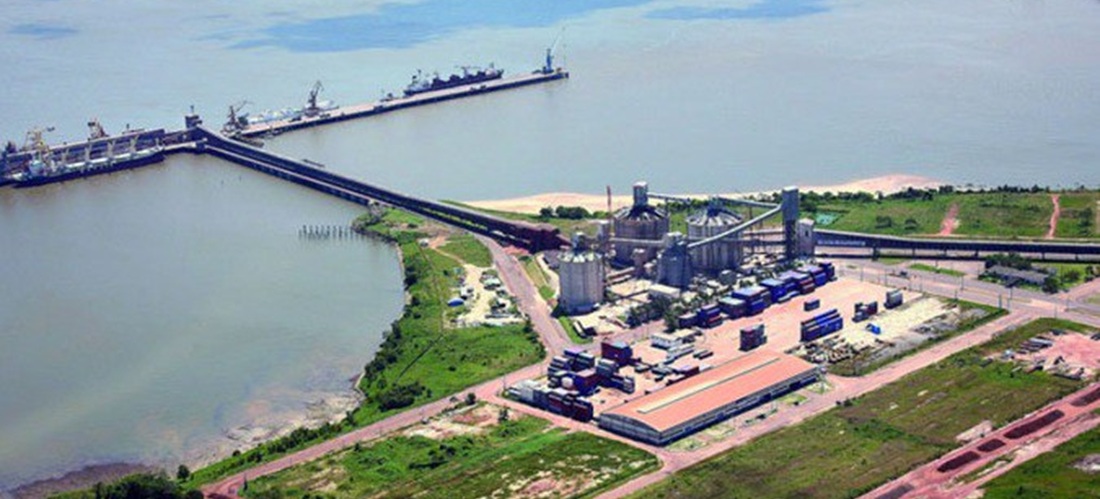
Brazil’s Northern Arc increased soybean and corn throughput by around 57% in four years, from 36.7 million tonnes in 2020 to 57.6 million tonnes in 2024. In 2025, routes north of the 16th parallel south — which crosses the middle of Brazil — accounted for 39.5% of the country’s exports of the two commodities, signaling a shift in the geography of Brazil’s agribusiness export flows.
The expansion reflects a combination of growing agricultural frontiers and investment in logistics infrastructure, with greater integration among highways, railways, waterways and port terminals. The Northern Arc accounted for 36.2% of Brazil’s soybean exports and 48% of corn shipments in 2025.
The shift, however, does not mean the country’s major ports in the South and Southeast are being replaced. Santos and Paranaguá continue to handle significant volumes, while northern corridors have emerged as additional alternatives for producing regions, particularly the Center-West and Matopiba.
The result is a more diversified export logistics network, giving Brazilian agricultural production multiple routes to international markets.
BR-163 and Miritituba Drive Northern Arc Grain Exports
One of the main drivers of this transformation is the corridor formed by the BR-163 highway and the terminals in Miritituba, Pará. The highway has taken on a central role in connecting Mato Grosso’s producing regions with the Amazon waterway system.
The corridor combines road transportation from farms to transshipment terminals with barge convoys along Amazonian rivers. The cargo then moves on to terminals connected to international maritime shipping.
Brazil’s National Supply Company (Conab) links the growth of Northern Arc grain exports precisely to the integration of highways, railways and port terminals, as well as the expansion of agricultural frontiers and greater use of the region’s waterways.
The system, however, also presents challenges. Navigation in the Amazon is sensitive to river conditions and periods of drought, making operational predictability an important factor to consider as the corridor expands.
The growth of the Northern Arc is also increasing pressure for new rail alternatives. In this context, Ferrogrão (EF-170) stands out as one of the main projects aimed at expanding transportation capacity between Mato Grosso’s producing region and the terminals in Miritituba.
The project calls for a rail connection between Sinop, Mato Grosso, and Miritituba, Pará, creating an alternative to the predominantly road-based transportation currently used along the corridor.
The railway is also presented as a way to increase integration among the different transportation modes that make up the Northern Arc. Connections with waterway terminals would make it possible to combine high-volume rail transportation over the inland segment with barge navigation and, subsequently, ocean shipping.
Source: Portal BE News
-
Grains
Nov, 03, 2021
0
Brazil sets new record in fertilizer imports
-
Economy
May, 23, 2023
0
Trade balance update: Brazilian exports rise 9.6%
-
Meat
Feb, 01, 2023
0
Beef: Argentina’s exports generate US$ 3,431 billion in 2022
-
Uncategorized
Jun, 26, 2020
0
Forecast is that locust cloud is unlikely to enter Brazilian territory