


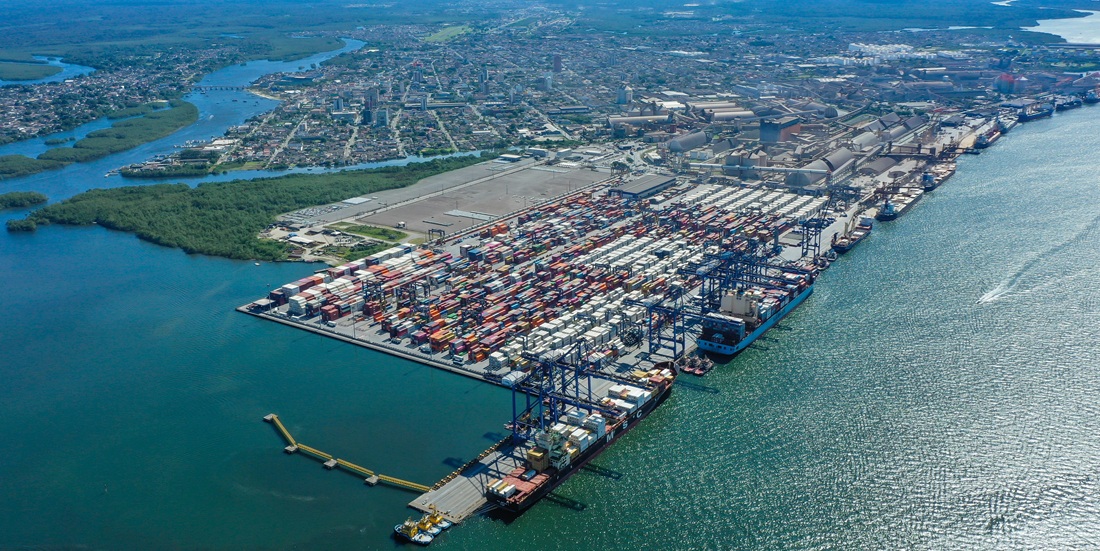
On the Road to the World Cup: Beef and Timber Shipments to North America Grow Through TCP
Jun, 08, 2026 Posted by Sylvia SchandertWeek 202624
As attention turns to the 2026 FIFA World Cup in the United States, Mexico, and Canada, TCP, the company that operates the Paranaguá Container Terminal, has been expanding its logistics presence in the tournament’s host countries. In 2025, the terminal handled more than 1.1 million tonnes in import and export operations with North America, consolidating the region as one of the main destinations and origins of cargo shipped through TCP. The data comes from the Dataliner platform and was compiled by the terminal’s market intelligence team.
In 2025, the route handled 950,800 tonnes of exports and 190,500 tonnes of imports, with a strong presence of cargo related to construction, packaging, agribusiness, industry, and food products. The main export commodities included timber, paper, and chicken meat.
Even amid a more complex international environment marked by new U.S. tariffs, some segments continued to expand through Paranaguá. In the first quarter of 2026, TCP shipped 231,900 tonnes to North America, while imports reached 38,000 tonnes.
According to Fabio Mattos, TCP’s Commercial Manager, “the United States is one of the main buyers of Brazilian beef, and exporters rely on the Terminal as the country’s leading gateway for meat and frozen cargo shipments. Today, TCP has the largest refrigerated container storage infrastructure in South America, with 5,280 reefer plugs.”
Beef was one of the highlights of the first quarter, with 35,700 tonnes exported to the region, up 19% compared to the same period in 2025. Shipments to the United States alone totaled 31,700 tonnes, an increase of 26%. This performance continues the Terminal’s strong growth trend, which reached a historic high in 2025, shipping 1.034 million tonnes of beef, up 53% from 2024.
Timber exports remained the leading cargo shipped from the Terminal to North America, totaling 110,000 tonnes in the first quarter of 2026, a 12% increase. Widely used in construction, furniture manufacturing, and packaging production, timber is one of TCP’s main export gateways in Brazil’s South and Southeast regions.
The chart below shows the historical trend in containerized wood shipments recorded at the Port of Paranaguá, according to data from Datamar’s DataLiner platform.
Wood Exports | TCP | Jan 2023 – Apr 2026 | TEUs
Source: DataLiner (click here to request a demo)
“The North American market has very solid consumer demand, especially in the timber and animal protein segments, which Brazil supplies exceptionally well. What has changed under the new scenario is the need for exporters to operate with greater flexibility, reallocating volumes and quickly adjusting their commercial strategies as international conditions evolve,” Mattos said.
Mexico Takes the Lead and Canada Accelerates
One of the most significant changes this quarter was the shift in the profile of export destinations served by TCP. Mexico became the main destination for the Terminal’s exports to North America in the first quarter of 2026, with 130,400 tonnes handled, surpassing the United States, which received 93,000 tonnes.
The growth in Mexico was driven mainly by timber exports, which reached 55,000 tonnes, a 33% increase compared to the same period in 2025. Paper and chicken meat also gained ground, with 35,700 tonnes and 26,700 tonnes shipped, respectively.
The United States, meanwhile, remained the main origin of TCP’s imports from the region, sending 30,600 tonnes to the Terminal during the quarter. The main imported products included polyethylene, used by the manufacturing industry, and sulfur, an important input for fertilizer production.
Canada recorded one of the fastest growth rates, although volumes remain lower than trade with the United States and Mexico. Exports nearly doubled, rising from 4,200 tonnes to 8,100 tonnes during the quarter. The paper segment stood out, with export volumes increasing fivefold to 3,600 tonnes. Timber, pork, and beef also posted growth in shipments to the country.
To support this trade flow, TCP operates six regular shipping services connecting Paranaguá to major ports on the Atlantic coast of the United States and Mexico, in addition to a service linking the Terminal to Mexico’s Pacific coast.
“The large number of shipping services, storage infrastructure, and logistics integration make all the difference in ensuring cargo can be shipped quickly and remain competitive, even amid changes in the international landscape,” Mattos concluded.
Source: TCP
-
Ports and Terminals
Jun, 24, 2025
0
APS launches tender for structural reinforcement and draft increase at Barnabé Island quay
-
Ports and Terminals
Feb, 22, 2021
0
Port of Imbituba has new executive board
-
Ports and Terminals
Jan, 27, 2026
0
ANP approvals for Bio-LPG production boost logistics integration in southern Brazil
-
Grains
Feb, 20, 2024
0
Commodity gains ground in exports to neighbors