


Brazil sets first official standard for DDG, paving way for export growth
Jul, 01, 2026 Posted by Gabriel MalheirosWeek 202627
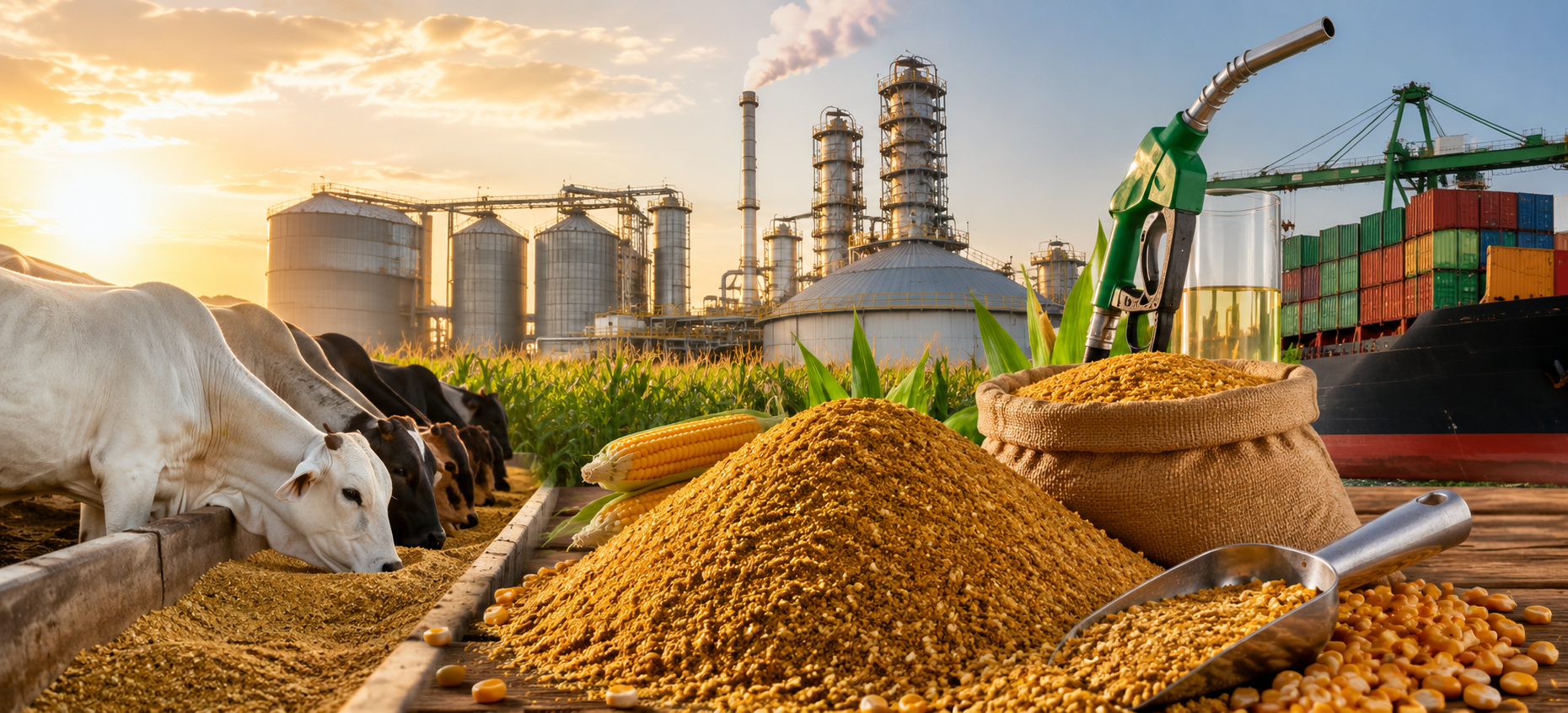
Brazil’s Ministry of Agriculture and Livestock has issued a regulation creating the country’s first official identity and quality standard for DDG, or dried distillers grains, the main co-product of corn ethanol production.
The measure establishes official criteria for product identity, quality, classification and labeling. It also defines concepts related to biorefineries and industrial plants that process corn and other grains for ethanol production.
The new rules are expected to strengthen Brazil’s corn ethanol chain, make DDG easier to trade in domestic and international markets, and expand business opportunities for biorefinery co-products.
According to the ministry, the regulation is designed to improve inspection mechanisms, increase legal certainty and give producers, processors and buyers more predictability.
DDG is widely used in animal feed, especially in beef and dairy cattle production, as a source of protein and energy. With official standards in place, the product gains credibility and traceability, two key requirements for access to more demanding international markets.
The measure also benefits corn ethanol plants, which will now have a technical benchmark for classifying and selling the co-product. That should help reduce information gaps and lower the risk of commercial disputes.
The regulation comes as corn ethanol production expands in Brazil, especially in the Center-West. DDG is a higher-value co-product, and more efficient commercialization can improve margins for ethanol plants.
Standardization could also make Brazilian DDG more attractive to foreign buyers, who often require clear quality and origin guarantees. In the domestic market, the product may gain more ground in animal nutrition as a partial substitute for corn and soybean meal, helping reduce costs for livestock producers.
For the livestock sector, DDG is considered a strategic input because it contains high levels of protein and phosphorus and provides digestible energy. With official classification, farmers will have more security when buying the product and clearer access to its technical specifications.
The regulation may also support the development of regional markets, since official classification makes logistics and price formation easier. The rule also covers other biorefinery co-products, such as WDG, or wet distillers grains.
The new standard is expected to support Brazilian DDG exports by reducing technical barriers and increasing confidence among international buyers. It also gives the product stronger legal backing, reducing the risk of trade disputes and improving the competitiveness of Brazil’s corn ethanol chain.
Source: Space Money
-
Other Logistics
Feb, 25, 2022
0
Large bulk carrier fleet exceeds 1,000 ships
-
Meat
Apr, 26, 2019
0
JBS sells Brazil’s first ever chicken cargo to India
-
Shipping
Aug, 15, 2021
0
Maersk’s AC6 service ships will skip the scale at Ningbo Meishan because of terminal closure
-
Shipping
Nov, 06, 2025
0
Maersk reports solid results in the third quarter of 2025