

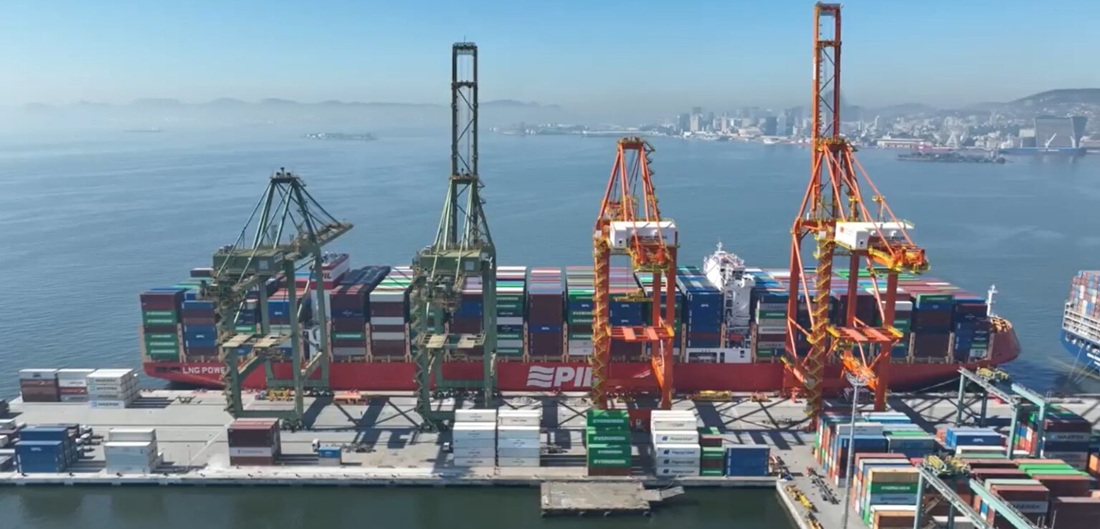
PIL vessel makes first South America call at the Port of Rio
Aug, 28, 2026 Posted by Gabriel MalheirosWeek 202636
A PIL vessel at the Port of Rio made its first call in South America this week, as Rio Brasil Terminal, or RBT, received the Kota Elok, operated by Singapore-based carrier Pacific International Lines.
The vessel called at RBT, the container terminal at the Port of Rio de Janeiro, in an operation that expands the presence of large container ships at the Rio port complex.
The Kota Elok has nominal capacity of 13,064 TEUs. It is 336 meters long, has a beam of 51 meters and a deadweight of about 140,000 metric tons. The call marks another operation between PIL and RBT.
The vessel is part of the East Coast Service 1, or ES1, which connects Asia to the east coast of South America. During the voyage, the ship also called at ports in Argentina and Uruguay.
According to the terminal, the operation strengthens the Port of Rio de Janeiro’s links with international trade and broadens cargo-handling options at the port complex.
Environmental agenda
PIL said the Kota Elok uses propulsion technology that includes liquefied natural gas, or LNG. The company linked the operation to efforts to reduce the environmental impact of shipping and expand the use of more sustainable solutions in maritime transport.
The call comes as Rio Brasil Terminal expands its operations. In July, the terminal also began regularly receiving vessels from Norcoast, after the Port of Rio was added to a coastal shipping route connecting Rio de Janeiro with ports in Brazil’s North, Northeast, Southeast and South regions.
The operation includes domestic and feeder cargo and expands logistics connections with the Manaus Free Trade Zone, a key industrial hub in northern Brazil.
With the arrival of the Kota Elok, RBT expands its maritime service offering at the Port of Rio, combining international and coastal shipping operations with connections to different markets.
The PIL vessel at the Port of Rio highlights the terminal’s role in linking Brazil’s southeast with long-haul Asia-South America services and domestic feeder networks.
Source: Portal Be News
-
Ports and Terminals
Sep, 30, 2022
0
Container Throughput at the Port of Santos Grows by Double Digits in August
-
Automotive
May, 05, 2026
0
Argentina’s auto parts industry feels the pain from Milei’s shock therapy
-
Ports and Terminals
Mar, 30, 2026
0
Dredging moves forward at Inácio Barbosa Maritime Terminal, expanding port capacity
-
Shipping
Oct, 29, 2020
0
Bolsonaro nominates Eduardo Nery as managing director of ANTAQ