

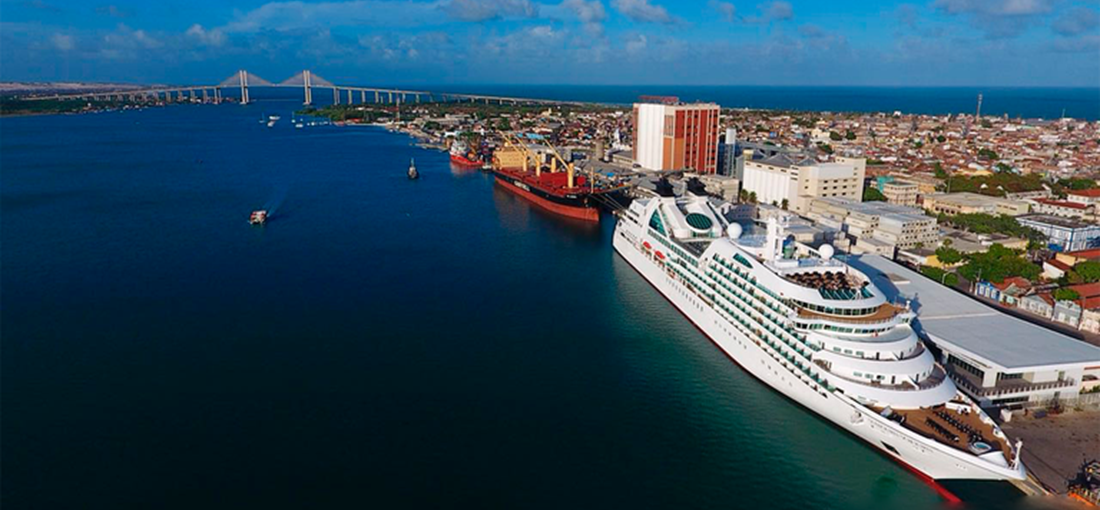
Port of Natal completes dredging, awaits permit for second phase
Sep, 24, 2026 Posted by Gabriel MalheirosWeek 202639
The Port of Natal has completed the first phase of dredging works on its access channel through the Potengi River and is awaiting an environmental permit to begin the next stage.
The work, completed in late August, removed around 1.2 million cubic meters of sediment and increased the channel depth from 10.5 meters to 12.5 meters.
With the maintenance dredging completed, the port can accommodate larger vessels. Before the intervention, Natal was able to handle ships up to 202 meters long with a beam of 30 meters. The new parameters allow vessels up to 232 meters long and between 35 and 40 meters wide.
Paulo Sidney Gomes Silva, technical and commercial director at Rio Grande do Norte state dock company Codern, said the change broadens the range of vessels that can call at the terminal.
“Previously, at the depth we had, we could receive vessels up to 202 meters long with a beam of 30 meters. With this maintenance dredging, we have increased that to 232 meters in length and a beam of 35 to 40 meters,” Silva said. “That expands the possibility of new vessels calling at the Port of Natal.”
The first phase began on April 24 and had a completion period of up to four months. Codern said the schedule was met.
Following the removal of sediment, the inspection team is checking the leveling of the areas covered by the dredging work. The previous maintenance dredging campaign in the channel had been carried out in 2009.
Second phase will relocate turning basin
The next stage of the project calls for relocating the turning basin, the area where vessels maneuver when entering and leaving the terminal.
The basin is currently located almost directly in front of the Port of Natal in the Potengi River. Under the project, it will be moved closer to the Newton Navarro Bridge.
Codern needs an amendment to its environmental license from Rio Grande do Norte’s Institute for Sustainable Development and Environment, known as Idema, before the work can begin.
Silva said the company expects the authorization in early October.
“The agency is reviewing it with the expectation that, by early October, we will have the authorization — the license amendment — so that this second phase can actually begin,” he said.
Once environmental approval is granted, the second stage is expected to take up to four months.
Its completion is necessary to further expand the terminal’s operating capacity and allow larger vessels to use the port.
R$60 million investment and other upgrades
The Port of Natal dredging project represents an investment of R$60 million.
The works are part of a broader improvement program that also includes replacing all quay fenders, renovating warehouses and installing a photovoltaic power plant.
“We are replacing all the fenders along our quay and renovating our warehouses, which will allow us to offer new, modern facilities to our customers,” Silva said. “We are also installing a photovoltaic plant that will generate clean energy.”
Melons are currently the leading export handled by the Port of Natal, with shipments mainly bound for the European Union.
On the import side, wheat is the port’s largest inbound cargo, with shipments arriving from Canada and Argentina.
Source: Agora RN
-
Ports and Terminals
Sep, 27, 2024
0
Santos and Las Palmas Ports Explore Partnership
-
Sugar and Ethanol
Dec, 14, 2020
0
Additional import quota for zero-duty ethanol expires with no renewal forecast
-
Oil and Gas
Feb, 08, 2019
0
Vaca Muerta records significant increase in oil and gas production in 2018
-
Shipping
Mar, 27, 2024
0
CMA CGM announces overweight surcharge from South America East Coast